As you walk the floor at CTW, keep the OCS industry survey in mind
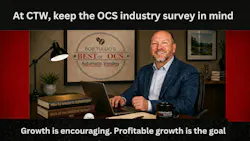
There is something about an industry gathering that gets the business development side of my brain working overtime. A conversation with an operator, a different approach to equipment, a product worth sampling and suddenly, the possibilities start piling up. At CTW in Austin, November 18-19, I will have the pleasure of serving as emcee. In my own head, I will also be connecting what we see and hear with what operators told Automatic Merchandiser in its latest survey - State of the Office Coffee Service Industry.
Growth is encouraging. Profitable growth is the goal.
The AM survey provides plenty of reasons for optimism. Eighty-two percent of responding operators reported increased OCS revenue during the reporting period, and 76% increased their number of locations. Nearly 71% described their outlook as very positive. Those are encouraging numbers for a business that has spent years adjusting to changing workplaces.
Another finding deserves equal attention: 76% experienced cost increases significant enough to affect pricing, purchasing or operations. Among those operators, 85% raised prices, while 62% absorbed some or all of the increases. How can we absorb pricing to that degree? Clearly, a growing top line does not automatically deliver a healthier bottom line.
As you talk with suppliers at CTW, ask questions that get beyond the appeal of a new offering. What does the equipment cost to service? How much cleaning does it require? What happens when volume falls below expectations? Can it help you earn more from an existing stop?
A great cup of coffee matters. So does the math behind it.
Follow demand, then find the right fit
Single-cup capsule or pod coffee led the survey’s list of offerings with the strongest increase in customer demand, selected by about 64% of respondents. Whole-bean or bean-to-cup followed at approximately 46%. Cold brew, iced or ready-to-drink coffee registered 27%.
That gives operators a useful starting point for supplier conversations. It also creates an opportunity to ask better questions. Which format fits a workplace with unpredictable attendance? What equipment makes sense for a smaller account? How do you introduce more choice without creating more service headaches?
Fraction-pack or bulk-brewed coffee remained the largest individual category in respondents’ reported revenue mix. There is still a substantial business to serve while exploring what comes next.
The opportunity is all about matching the experience to the account and pricing it accordingly.
Look beyond the office address
One of the survey’s most interesting findings concerns where OCS revenue is being generated. Offices and professional workplaces accounted for approximately 40% of respondents’ aggregate revenue mix by location type. The remaining 60% came from other settings, including manufacturing, multifamily communities, healthcare, distribution and hospitality. That should get your attention.
When you encounter a promising solution at CTW, picture where it could work in your territory. Could that brewer improve the breakroom at a manufacturing facility? Could an upgraded beverage program open a conversation with an apartment community?
Account size deserves attention, too. The most common typical customer size reported was 20 to 49 employees. A successful strategy needs room for those customers alongside the impressive corporate campus clients.
Use the learning journeys to sharpen your deal making
CTW’s learning journeys include Sales, Executive Leadership and New to Pantry Services. They connect naturally with the survey’s picture of operators adding locations, managing costs and responding to changing demand.
For someone exploring pantry, the questions should be practical: What will the client pay for? How will consumption be measured? Who controls replenishment? What service commitment can your operation support?
For an established OCS operator, the sales conversation may be about expanding the relationship you already have. What else does that customer need and what can you deliver profitably?
Those are conversations I am eager to hear in Austin.
Make convenience a big part of your own service
Fifty-eight percent of survey respondents offered a customer portal, mobile app or another digital tool for ordering or service management.
Consider what that means from the customer’s perspective? How easy is it to order supplies, request service or get an answer from your company?
The survey also found that 58% provided at least one environmental or sustainability-related offering. Ask customers which options matter to them, then ask suppliers how to provide those options with room for profit.
Make some decisions
NAMA designed the Connection Hub around collaboration between operators and suppliers. That makes it a useful place to bring specific business challenges. Before arriving, identify three priorities from your own operation. Then seek out people who can help you move forward. Take what you learn and put it to work.
The survey findings represent participating operators, rather than a complete industry census. Still, they give us valuable glimpse into what other operators are experiencing.
I look forward to seeing you in Austin, microphone in hand and questions ready. Let’s connect the dots and bring home ideas we can put to work.