Common Cents Act clears Congress with vending safeguard intact
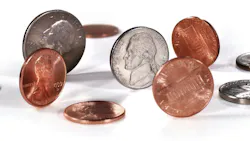
Congress passed a revised Common Cents Act that retains language requiring the Treasury Department to evaluate the effects on vending machines and other coin-accepting equipment before changing the nickel’s composition.
The Senate passed H.R. 10167 without amendment by unanimous consent on September 28, after the House passed it by voice vote on September 14. The legislation now awaits action by President Donald Trump.
The measure is related to H.R. 3074, the version VendingMarketWatch.com covered in July. H.R. 3074 passed the House July 14 but did not advance beyond its referral to the Senate Banking, Housing and Urban Affairs Committee.
Reps. Lisa McClain, R-Mich., and Robert Garcia, D-Calif., introduced H.R. 10167 on August 27. That bill became the legislative vehicle used to reconcile provisions from H.R. 3074 and the Senate’s version of the Common Cents Act.
Vending provision survives revised legislation
Under H.R. 10167, Treasury could consider a five-cent coin with an inner layer of zinc and an outer layer of nickel. The Treasury secretary could prescribe the composition only after testing and evaluation determine that it would reduce production costs and, “to the greatest extent practicable,” have minimal adverse effects on machines designed to accept coins.
The provision does not guarantee that every installed coin mechanism would accept a redesigned nickel without recalibration, software changes or replacement. It does, however, require equipment effects to be part of Treasury’s evaluation before adopting the alternative composition.
NAMA, which had pressed lawmakers to account for installed coin equipment, highlighted the retained safeguard in an update published over the weekend and credited its advocacy with keeping vending compatibility in the legislation.
Congressional passage does not immediately change the nickel or require operators to modify equipment. The bill authorizes Treasury to evaluate a lower-cost composition but sets no deadline for selecting or introducing a redesigned coin.
Bill also addresses penny phaseout and cash rounding
H.R. 10167 would codify the end of penny production for general circulation. The U.S. Mint stopped producing circulating pennies in 2025, but existing pennies would remain legal tender. The Mint also could continue making collectible pennies.
When exact change cannot be provided, the legislation would allow businesses to round a cash transaction or the change due to the nearest five cents. Despite language in the bill’s formal title referring to “required” rounding, the operative text says rounding is optional.
Electronic transfers, credit cards, checks, gift cards, money orders and other noncash payment methods would continue to be processed to the exact cent.
The legislation also would require the Federal Reserve to develop a plan addressing penny distribution and coin-terminal operations. Treasury would have to provide Congress with 60 days’ notice and a transition plan before discontinuing production of any other circulating coin.
If President Trump signs the bill, the next developments for convenience services operators will come from Treasury and the U.S. Mint: whether they begin testing an alternative nickel, how they include equipment manufacturers and operators in that evaluation, and whether testing indicates that installed coin mechanisms would require changes.