Common Cents Act moves to Senate with vending safeguards
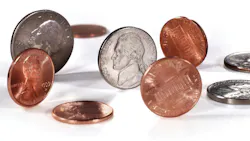
The U.S. House passed legislation on July 14 that would authorize testing of a lower-cost nickel, with new language directing the Treasury Department to evaluate how the proposed composition would affect vending machines and other coin-operated equipment.
The House approved H.R. 3074, the Common Cents Act, by voice vote. The legislation was received in the Senate July 15 and referred to the Senate Banking, Housing and Urban Affairs Committee. No hearing or markup has been scheduled.
For convenience services operators, House passage does not trigger an immediate coin change or require equipment modifications. The legislation is not yet law, and Treasury would have to test a proposed nickel composition before adopting it. Instead, the bill is the latest step in coin policy change that predates the federal government’s decision to stop making pennies in 2025. The House-passed version addresses equipment concerns documented by NAMA and in a 2025 House committee report.
Penny production has already stopped
President Trump directed the Treasury Department in February 2025 to stop producing pennies. Treasury subsequently ended production under the secretary’s existing statutory authority. The Common Cents Act would formalize the end of penny production in federal law.
Roughly 114 billion pennies remain in existence, the Treasury Department estimates. Existing pennies would remain legal tender under H.R. 3074.
NAMA advocacy
The version of H.R. 3074 approved by the House Financial Services Committee in July 2025 authorized a zinc-and-nickel five-cent coin and required Treasury to determine whether it would save money. It did not require Treasury to evaluate effects on coin-accepting equipment.
“Our ask with the Congress is to put substantive stakeholder feedback into the bill so that it isn’t simply a mandate to use this coin or that coin,” Bill Meierling, NAMA senior vice president of external affairs, said in June at the NAMA Fly-In. “The federal agencies need to take into consideration the impact of changing the coin.”
Minority views in the House committee report said NAMA and the National Federation of the Blind opposed the committee-approved version. The report warned that vending machines rely on electromagnetic and weight sensors calibrated to existing coin specifications. An abrupt change in composition could force operators to update or replace equipment.
NAMA’s public policy position on coin composition opposes changes that would impose a financial burden on vending operators or interrupt existing coin-acceptance equipment. The association supports alternatives that preserve a coin’s weight and electromagnetic characteristics and has called for government assistance with compliance costs.
“It’s really important to come up with something that will be a more price-competitive and better coin,” Meierling said. “But they need to figure out how to do it with minimal adverse impact to operators and anyone in coin-operated industries.”
“Our ask with Congress is to put substantive stakeholder feedback into the bill so that it isn’t simply a mandate to use this coin or that coin,” Meierling said. “The federal agencies need to take into consideration the impact of changing the coin.”
Rising nickel costs
Ending penny production and a declining number of pennies in circulation could increase demand for nickels, which also cost more than their face value to manufacture.
Rather than eliminate the nickel, the House bill would allow Treasury to consider a five-cent coin with an inner layer of zinc and an outer layer of nickel. The Treasury secretary could prescribe the zinc-and-nickel composition only after testing and evaluation show that it would reduce production costs and, “to the greatest extent practicable,” have a minimal adverse impact on machines designed to accept coins.
That language is important for vending operators with coin-accepting equipment, but it is not a guarantee that every existing coin mechanism would accept a redesigned nickel without adjustment. The final composition, weight and electromagnetic characteristics would influence whether validators could be recalibrated or would require more extensive changes.
The bill does not redesign the dime or eliminate the nickel. It would preserve the five-cent denomination while seeking to lower its production cost.
Senate version could change the outcome
The Senate now must decide whether to advance the House bill or its own companion legislation.
Sens. Cynthia Lummis, R-Wyo., and Kirsten Gillibrand, D-N.Y., introduced S. 1525 in April 2025. That measure remains in the Senate Banking Committee without a hearing.
The introduced Senate bill differs from the House-passed legislation in that it does not contain the House provisions addressing nickel composition or coin-machine compatibility. It also addresses cash rounding requirements.
As a result, the coin-operated vending provision could change. Whether the Senate preserves that language will be a central issue for vending operators and equipment providers.
About the Author
 Linda Becker
Linda Becker
Head of Content
Linda Becker is head of content for Automatic Merchandiser and VendingMarketWatch.com, responsible for the brands’ overall content strategy, planning and performance. She oversees the creation and performance of editorial and multimedia content across platforms such as magazines, websites, webinars, podcasts, newsletters, videos, social media, events and eBooks.
Since joining Automatic Merchandiser and VendingMarketWatch.com, Linda has developed a new appreciation for the convenience services industry and its essential role. She is dedicated to serving readers by covering the latest news in the vending, office coffee service and micro market industry. She can be reached at 262-203-9924 or [email protected].