Operator growth starts with execution
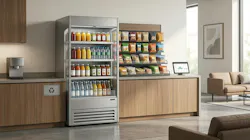
Operators need three things for success in convenience services: clear processes, consumer data and location-specific technology decisions, said Forward Thinkers founder Josh Rosenberg. Putting those elements in place can help convenience services operators turn strategy into results.
While convenience services operators have more technology and data at their disposal today than in the past, tools alone do not guarantee growth. In a conversation on Automatic Merchandiser and VendingMarketWatch.com’s Vending & OCS Nation, Rosenberg argued that operators need to connect their strategies to the people, processes and systems required to carry them out.
“A great idea is only as good as the people that can execute it,” Rosenberg said.
His advice draws on his experience at The Coca-Cola Company and Accent Food Services, which he helped build into a multistate operation. He now works with operators through Forward Thinkers.
Make the strategy executable
When an operator is not growing, Rosenberg said, it can be tempting to blame employee performance. But his evaluations often point to other issues: unclear roles, processes that don’t support the work needed, ineffective use of available data, or a failure to adjust when a strategy isn’t producing results.
Leaders should make sure employees understand what is changing, why it matters and how their work contributes to the outcome, he said. They also need to measure execution and be willing to adapt.
The same principle applies to growth plans, Rosenberg stressed. An idea that looks promising at the leadership level may create friction if the operation lacks the time, labor or processes to deliver it. Rosenberg said operators should test what it will actually take to achieve that idea before committing to a goal.
Use consumer insight to shape the offer
Rosenberg said operators compete for consumer spending across retail, not just within the convenience services industry. That makes it more important to understand what customers want and when they want it.
He encouraged operators to use data to understand consumers, dayparts and audiences, then build assortments that can include local, regional and core brands. He pointed to pantry as an example of a format where operators can offer a broader product mix.
Rosenberg also challenged operators to reconsider established supplier and equipment decisions when those choices limit their ability to meet consumer demand. The goal, he said, is to offer the right products in the right places, supported by the people, technology and processes needed to serve customers.
Choose smart equipment for the location
Smart equipment can help operators expand into new settings, Rosenberg said, including multifamily properties and urban residential locations. But its value depends on the site and the way it will operate.
A smart cooler may be useful in a workplace or a micro market with theft concerns. In a high velocity location, however, it may create new inefficiencies. Operators should weigh the location, equipment capacity, cost and expected return before deciding where the technology fits.
Rosenberg described smart equipment as an opportunity to reach new segments, while noting that operators are still learning where it works best. The practical question is not simply whether to adopt the equipment, but whether the location and operating model support it.
Apply AI to work already being done
Rosenberg sees AI as a tool that can improve speed, execution and outcomes when it helps connect systems, data and the customer journey. He said operators should look at how automation could give teams a more complete view of their operations and should prepare employees to use the tools effectively.
“AI is not going away. It’s evolving,” he said.
For operators, that means identifying a specific process or information gap before adopting a tool. AI should support work the business needs to do, rather than become a project without a clear operational purpose.
Local relationships remain an advantage
Rosenberg said local and regional operators can compete through nimbleness and close customer relationships. He sees opportunity for operators willing to explore new channels and adapt their business as consumer expectations and technology change.
Across each area, his message returns to execution: growth depends on understanding the customer, choosing an approach that fits the location and ensuring the organization can carry it out.
Listen to the podcast
 Vending & OCS Nation podcast guest Josh Rosenberg 2026
About the Author
 Bob Tullio
Bob Tullio
Bob Tullio is a content specialist, speaker, sales trainer, consultant and contributing editor of Automatic Merchandiser and VendingMarketWatch.com. He advises entrepreneurs on how to build a successful business from the ground up. He specializes in helping suppliers connect with operators in the convenience services industry — coffee service, vending, micro markets and pantry service specifically. He can be reached at 818-261-1758 and [email protected]. Tullio welcomes your feedback.
Subscribe to Automatic Merchandiser’s new podcast, Vending & OCS Nation, which Tullio hosts. Each episode is designed to make your business more profitable.