Vending has a reputation problem, but operators can beat the stigma
Key Highlights
- Unattended machines leave little room to fix problems in person, making every customer interaction especially important.
- Fresh and healthier food options can drive growth, but require careful temperature control and food-safety practices.
- Product scanning, computer vision, and accurate planograms help prevent order mix-ups and incorrect sales data.
- Preventive and predictive maintenance, reliable connectivity, and backup power can reduce downtime and protect inventory.
- Clear contact information and responsive follow-up help operators resolve issues and build lasting customer trust.
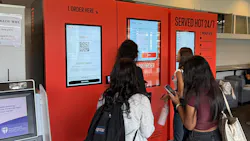
To many people, buying from a vending machine feels like taking a risk. They might end up with a stale sandwich of unknown age, a snack stuck behind the glass, or a card reader that just won’t connect. And even though newer machines and emerging food-tech brands have already resolved many of these headaches, public perception is slow to change, leaving operators with an expensive trust problem.
Repairing vending’s reputation requires effort from everyone along the chain, from manufacturers and technology providers to hosts and food suppliers, but the operator brings all those pieces together and is the one customers interact with.
Operational gaps
In a staffed food outlet, someone can see what went wrong, replace the meal and offer an apology on the spot. In unattended foodservice, operators rarely get that chance to make things right face to face. That puts more weight on every interaction.
The fresh food challenge
According to a NAMA report, 65% of operators say their clients are asking for healthier product selections and 59% see these products as a growth opportunity.
Some operators have already started moving toward fresh food, but refrigeration presents a challenge. Just think of every sad sandwich you’ve ever seen. When stored in a refrigerator for too long, bread becomes stale and develops an odd taste. And fresh, refrigerated products spoil more quickly than less healthy processed foods.
Flash-frozen meals can be an alternative to chilled food. Depending on the dish, flash-freezing can extend shelf life to up to a year while preserving the food's nutritional value. However, in both cases, food safety and temperature control are more of an issue than they would be for highly-processed junk food.
"Blind" machines and planogram mix-ups
A classic vending machine doesn’t “know” what it’s selling, and with them, the accuracy of your data relies on the person who loaded it, who may have been rushed or distracted.
If a driver stocks granola bars in the slot meant for kettle chips, a customer who orders a granola bar gets charged the chip price instead of the granola bar price, and your sales data gets recorded incorrectly.
Another easy mistake to make is putting a similar-looking product in the wrong place with the wrong label, such as stocking bottles of oolong tea in the slot reserved for black tea. Something like that is obviously even more of an issue when the customer is interacting with a screen and can’t physically see the items in the machine. With prepared meals, customers could order pasta but receive fish, or select the vegetarian option and get meat instead.
An ounce of prevention beats a pound of cure
Vending machines are full of moving parts, and they require regular maintenance. You can best approach that in three ways.
- Reactive: wait for a breakdown. A spiral jams and nobody notices until the next restock. Then a technician comes once, sometimes twice, with the machine sitting idle until it’s fixed.
- Preventive: replace parts on schedule, before they fail. This can cost you more upfront but save you money in the long run because you won’t have missed opportunity costs.
- Predictive: have your machine report on itself. Sensors tracking current, temperature, and mechanical behavior can forecast a problem before it happens. Predictive maintenance is still far from the norm, though. Berg Insight estimates that only 58.1% of the world’s 14 million vending machines were connected at the end of 2025, and Mordor Intelligence finds that more than a third of connected machines have only basic telemetry (remote alerts and stock counts).
Every time someone walks up to an out-of-order machine, it reinforces the old perception that vending is a gamble when you’re hungry. So it’s better to get ahead of problems with either a preventive or predictive approach.
Payment glitches and dead zones
Payments have always been a headache for the vending industry. The problem was even worse a few years ago, when cash was the primary payment method. Customers often had to deal with jammed bills, while operators needed to regularly resupply machines with change. Today, predictive maintenance for cash-handling equipment has helped reduce these issues, while the widespread adoption of card payments has made transactions more convenient.
Still, cashless payments bring their own frustrations: connectivity issues, failed transactions, and unresponsive card readers. A stable connection is essential for processing cashless payments, but that can be difficult to ensure in basements or parking garages. Even in locations with generally reliable internet access, occasional connectivity issues can disrupt transactions.
What you can do as an operator
Until relatively recently, a vending machine was basically just a metal box that dispensed sugary soda and candy. You loaded it, collected the money, and when something broke, you came around a few days later to fiddle with it. But customer expectations have evolved since the 2000s, and your SOPs need to evolve with them.
1. Prioritize reliability
Set up sensors and an alert system that collect data on your machine’s condition and notify you when something goes wrong, whether it’s a jammed column, a temperature drop, or a payment failure.
Connectivity also shouldn’t depend on a single point of failure. You can pair a SIM card with your venue’s Wi-Fi so the machine stays online if one of them malfunctions.
The same goes for backing up your power supply. With a machine that keeps food chilled or frozen, a long outage means losing stock.
2. Invest in better technology and product quality
Learn to see problems as opportunities to find engineering or process fixes that make your whole operation run more smoothly.
Planogram mix-ups are a good example. Scanning the code on every product as it’s loaded, or using computer vision to recognize what’s on the shelves, helps you track what happens to your products.
Tech like this enables you to scale up while still offering fresh, healthy food options and giving your customers confidence that what they get is safe and exactly what they ordered.
3. Make customer trust a priority
No machine will ever be perfect. Even well-run machines will have problems. Make it easy for customers to see who to contact right at the machine. When they reach out, make sure someone on your team listens, takes their concern seriously, and follows through to put things right.
Vending can be the best option
Vending machines have traditionally been perceived as low-ticket "snack machines," but with the right strategy, they can have stronger unit economics, yield higher average checks, and even compete with cafeterias and convenience stores.
About the Author
 Anastasia Kalinkina, COO of Primepick
Chief Operating Officer, Primepick
Anastasia Kalinkina is Chief Operating Officer of Primepick, a New York-based company that designs and manufactures robotic food kiosks, where she owns product, supply chain and go-to-market, leading deployments and market expansion across the US. She was previously COO of the dark-kitchen operator Local Kitchen and co-founded Sizl, a Chicago food-tech startup.