Running a tighter operation: The technology shift operators can’t ignore
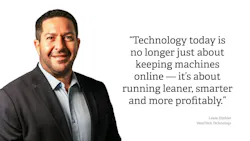
Unattended retail growth will not be driven by equipment alone. Instead, it will succeed —or fail — on the strength of the technology and systems behind it. That was the consistent message of Lewis Zimbler, senior vice president of payments and technology at VendTech Technology, during our recent conversation.
Zimbler has worked in the vending industry for 20 years, most notably at Nayax UK, working on payments and vending technology. Now at VendTech, he is focused on building systems to help address real-world operator needs.
While our conversation touched on many aspects of convenience services operations, Zimbler repeatedly returned to the ongoing technology shift toward unified, operator-centric backend systems. It is a key focus of his new role with VendTech Technologies.
For modern convenience services operators, technology is at the heart of all aspects of the operation, from how efficiently routes are run and how much labor is required to how much profit remains after service costs. Yet technology implementation remains uneven. For some independent operators, Zimbler said, the tech stack is where the biggest gaps exist.
The shift from VMS to something bigger
“The reality is, most operators are firefighting every day,” Zimbler said. “They’re servicing machines, fixing issues, restocking, trying to grow. They don’t always have the time to step back and look at where the inefficiencies are.”
The solution he described is not simply a better VMS, but an enterprise-focused operating platform.
“One system,” he said. “And of course, once you’ve got all the data in one system, as a vending operator, there’s all sorts of savings — mainly operational cost savings — that come into play which aren’t necessarily calculated on the same part of the P&L sheet.
“This is not just about adding an extra 1 cent profit to a product. You’re now saving valuable time of your staff, and you’re able to service more machines, with fewer people, in a shorter period of time. And that could be anything from the actual servicing of the machines, to repairs, to maintenance, to downtime reporting, to backend reporting, to generating pick lists and actually packing those boxes for the machines,” Zimbler added.
Instead of treating vending management as a standalone function, the backend technology connects the entire operation, from machine data to warehouse activity to reporting, he said. Yet for a solution to be viable, it must be flexible. Operators are not going to replace existing hardware overnight, so any system that expects a clean slate will struggle to gain traction.
“You have to meet operators where they are,” Zimbler said. “That means being able to take data from different devices and bring it into one system.”
From there, the benefits show up quickly: more efficient pick lists, less time spent servicing machines, improved uptime and the ability to support more locations with the same resources.
Operators often resist adding another system, Zimbler acknowledged. He predicts adoption will be a gradual process rather than a wholesale change. “You don’t walk in and replace everything. That’s not realistic,” he said.
Instead, an operator may integrate a handful of devices or deploy a limited rollout to introduce the system without disrupting the larger operation. From there, the system has to prove its value in day-to-day use. “If it makes their job easier, they’ll use it,” he said. “If it doesn’t, they won’t.”
Where operators are still losing margin
From a payments perspective, Zimbler says operators are leaving money on the table.
“Without going into the costs associated with cash — and I don’t even just mean counting the cash, collecting the cash, banking the cash — the issues that happen on machines because of a coin jam or because of a bill jam that end up blocking that machine are costly to operators. [That’s] another cost that is never considered on any P&L — it’s just part of the service. But in reality, it happens, and it happens daily.”
Cashless systems reduce operational costs and headaches, Zimbler notes, but “what matters is what that enables.” Cashless systems open the door to more flexible pricing, allowing operators to move beyond fixed increments. They also enable mobile wallets, loyalty programs and insights about consumer purchasing habits.
“Once you get people into the mobile space and using mobile wallets, then you start to be able to play around with might be called closed systems — loyalty programs. Everyone, especially in America, loves a good loyalty program. Buy five, get one free. Buy nine, get the 10th free — whatever it may be,” Zimbler said. “Once you start going to that cashless world, there are so many more opportunities to take.”
While cash usage persists in some workplaces, the move toward cashless-only machines is growing. Zimbler sees the overall direction as settled. “In many environments, the consumer has already moved on,” he said, pointing to stadiums, airports and other high traffic venues.
“There will always be exceptions,” he said. “But overall, the direction is one way.”
QR payments and other emerging methods could lead to further shifts for operators, Zimbler said. He acknowledged the U.S. may lag behind other global markets in adopting QR technology for transactions, mainly due to concerns about data security and trust. That hesitation, he suggests, is not unusual. New payment methods tend to follow a pattern of gradual acceptance, driven by familiarity and repeated use.
“Before COVID, most people didn’t use QR codes at all. Now, everyone knows what they are,” he said.
Leaning into technologies like QR codes and app-based systems is one way that Zimbler said could help reduce transaction costs by bypassing traditional payment networks.
“QR is not really for — maybe until 2027. But if we start building our ecosystem with things like that in mind, when it comes to making that jump, the technology is already out in the field, it’s in the machines, it’s on our markets,” he said.
What matters most
Throughout the conversation, Zimbler returns to a central point: the front-end experience has largely standardized. From a consumer perspective, expectations are simple:
- The product must be available.
- The payment must work.
- The machine must deliver.
“That’s table stakes now,” he said.
The differentiation, he argues, lies in how efficiently the business operates behind the scenes. Inventory management, service scheduling, reporting and effective data intelligence and management are all areas where small improvements can have a measurable impact. “That’s where operators win or lose,” he said.
The shift toward integrated systems may be particularly important for smaller operators. Limited resources make it difficult to manage multiple systems or invest in custom solutions. A unified system can reduce that complexity, allowing smaller operators to operate more competitively without significantly increasing overhead. “They need tools that work out of the box and scale with them,” he said.
In conclusion, Zimbler had one message for operators: “Stay open to change,” he said.
Operators often rely on familiar systems, even when those systems no longer meet their needs. As technology evolves, new options can simplify operations and improve performance.
“You don’t have to change everything overnight,” he said. “But you do have to stay open to what’s coming.”
About the Author
 Linda Becker
Linda Becker
Head of Content
Linda Becker is head of content for Automatic Merchandiser and VendingMarketWatch.com, responsible for the brands’ overall content strategy, planning and performance. She oversees the creation and performance of editorial and multimedia content across platforms such as magazines, websites, webinars, podcasts, newsletters, videos, social media, events and eBooks.
Since joining Automatic Merchandiser and VendingMarketWatch.com, Linda has developed a new appreciation for the convenience services industry and its essential role. She is dedicated to serving readers by covering the latest news in the vending, office coffee service and micro market industry. She can be reached at 262-203-9924 or [email protected].