Make the refreshment program deliver on the promise

An operator can recommend a coffee machine, change a snack assortment or add pantry service. The account conversation becomes more useful when it also answers a question: What is the client trying to accomplish?
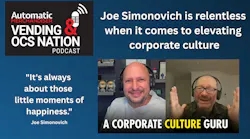
That is the strongest operator lesson from Joe Simonovich’s recent guest appearance on Automatic Merchandiser and VendingMarketWatch.com’s Vending & OCS Nation podcast. Simonovich, whose background includes Corporate Essentials, describes Daycast as a workplace experience agency that partners with independent operators.
Connect the recommendation to the objective
Simonovich describes ongoing, two-way communication with clients and operators as part of Daycast’s approach. Its role includes recommending programs and helping see them through. “We’re going to give that why,” he said.
For an operator, that raises a useful distinction between explaining what a program includes and explaining why it fits a particular account.
A proposal can describe equipment, assortment and service frequency clearly without establishing what the client expects those choices to achieve. Bringing that objective into the discussion gives both sides something more specific to work toward. What does the client want employees to experience? What is missing from the current program? Which parts of the proposed service address that concern?
These questions keep the discussion about workplace culture grounded in decisions the operator can actually make.
Make the daily service support the promise
The workplace conversation still comes back to execution, Simonovich noted. His example is a coffee machine that goes down unexpectedly. An operator who is able to fix it before employees miss their morning coffee delivers on the service promise.
Even if such a quick turnaround isn’t possible, Simonovich says it’s important to acknowledge problems honestly and address them. “It’s how you deal with those things,” he said.
A discussion about improving the workplace needs room for those ordinary service questions. What happens when the equipment fails? How does the client learn what is happening? Who takes responsibility for resolving it? They connect the proposal with what the client will encounter after installation.
They also give operators a practical starting point. Before expanding an account’s offerings, examine whether the existing service supports the relationship the business wants to build.
Choose the scope that fits the business
Simonovich cautions against assuming that missing a move into pantry or micro markets necessarily represents a business failure. “Every business is not meant to be a pantry service,” he said. Instead, he says, operators should seek to recognize market changes and adapt the appropriate parts of the business.
That is a useful boundary for operators considering how far to extend their workplace offering. Understanding a client’s objectives can guide a decision to expand, but it can also clarify where an operator’s strengths fit best.
The question becomes more specific than whether to add another service: Can the business deliver it consistently, and does it help meet this client’s needs?
About the Author
 Bob Tullio
Bob Tullio is a content specialist, speaker, sales trainer, consultant and contributing editor of Automatic Merchandiser and VendingMarketWatch.com. He advises entrepreneurs on how to build a successful business from the ground up. He specializes in helping suppliers connect with operators in the convenience services industry — coffee service, vending, micro markets and pantry service specifically. He can be reached at 818-261-1758 and [email protected]. Tullio welcomes your feedback.
Subscribe to Automatic Merchandiser’s new podcast, Vending & OCS Nation, which Tullio hosts. Each episode is designed to make your business more profitable.