Build the market around the location, not the equipment
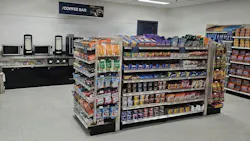
Micro markets have given convenience services operators considerably more room to sell than traditional vending. Consumers can pick up a product, compare choices and buy multiple items in a single transaction. Operators can offer fresh food and premium products that may command higher prices. Newer autonomous formats can extend some of those advantages into locations where an open micro market may not work.
But more opportunity does not automatically mean better returns.
When asked about the state of vending, micro markets and autonomous retail, operators, consultants and technology providers repeatedly returned to the same basic principle: Start with the location and build the retail program around it — not the other way around.
That means looking beyond headcount to determine what consumers at the location want, how they buy, what products the location can support, how much pricing flexibility exists and what level of service the operator can profitably deliver.
Start with the problem the location needs to solve
The first design decision may be whether the location should have a traditional micro market at all.
Jon Holden of All Star Services, a convenience services operator in Port Huron, Mich., said autonomous equipment can deliver a return in the right environment, but he warned against assuming that newer technology belongs everywhere. Equipment costs and the customer’s sensitivity to retail prices have to be considered before deployment.
Josh Rosenberg, the founder and managing partner of Forward Thinkers, a business consulting and executive coaching firm focused on strategy, operations and convenience, described the decision in terms familiar to retailers: right product, right price, right location and right equipment.
More importantly, Rosenberg said operators need to stop evaluating every prospective account using the same formula and instead ask what problem they are solving for that particular customer.
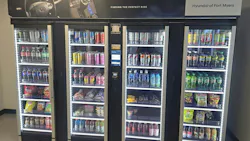
That distinction has become increasingly important as operators gain more format choices. A traditional open micro market may suit one account. Another might be better served by a smart cooler or smaller autonomous store. Traditional vending may remain the better answer where economics, security or customer expectations make another format difficult to justify. The goal isn’t to install the newest equipment. It is to choose the format that can be serviced effectively and profitably.
Holden cautioned that putting too much equipment into an account that cannot support it creates two problems: The operator doesn’t get the expected return, and the client can come away believing the concept itself doesn’t work.
Design around how consumers actually shop
Once the format is right, the market has to make buying easy.
Rosenberg identified speed, convenience and control as major reasons consumers are responding to autonomous retail. Customers increasingly expect to choose how they pay and to complete transactions without unnecessary friction.
Holden similarly pointed to smartphone wallets, app-based payments and tap-to-pay as part of the experience consumers now expect.
For operators, that makes checkout part of market design rather than simply the last step in the transaction. The path from seeing the product to paying for it should be obvious and quick.
The same principle applies to assortment. Consumers need to find products they actually want when they arrive.
Tony Danna of Cantaloupe said operators have become more sophisticated about product mix, in part by listening more closely to customers. Fresh food has also improved, he said, giving operators products with higher average tickets and an elevated presentation that can support higher prices.
The lesson is straightforward: Don’t merchandise a micro market like a larger vending bank.
The open retail format gives operators room to broaden the assortment, introduce fresh food and premium choices and encourage multi-item purchases. Smart-store formats can extend that flexibility into some accounts where operators previously would have been comfortable installing only vending.
That expanded assortment, however, needs to be intentional. More SKUs do not automatically create more sales. Product selection should reflect what customers at that particular location are buying.
Don’t design the market around the lowest possible price
Pricing is another area where operators can leave money on the table.
Matthew Rainey, owner of Surpass Refreshments, a convenience services operator in Fort Myers, Fla., attributed some of the industry’s revenue growth to price increases as well as the greater use of premium products in micro markets and smart stores. In his experience, consumers in a micro market often focus first on finding the product they want.
Rosenberg urged operators to consider the broader value of having food and beverages immediately available at the location rather than automatically assuming customers will reject a higher price.
That doesn’t mean price sensitivity disappears. Holden specifically identified it as one factor operators need to evaluate when deciding whether a more expensive autonomous solution can produce the required return.
It does mean pricing should be designed around the location, assortment and convenience being offered rather than carried over automatically from another account or format.
Premium fresh food, for example, can create a higher average ticket than traditional snacks. A secure autonomous format may allow products or price points an operator would not risk in an open environment. A customer at an account with few nearby food options may value on-site availability differently than a customer at an account surrounded by restaurants and convenience stores.
Use data to keep redesigning the market
A profitable market isn’t finished on installation day. Real-time data gives operators an opportunity to continually adjust assortment, inventory and service to what is actually happening at the account.
Ben Thomas of Nayax identified visibility across the fleet as increasingly important for decisions about inventory, pricing and service. Danna similarly noted that connected autonomous equipment can provide operators with more immediate information about what a location needs and when it needs service.
That changes market design from a one-time installation decision into an ongoing process.
If an item consistently sells out, the operator can increase its facings or inventory. If another barely moves, that space can go to something else. Transaction information can help to reveal whether consumers are building baskets or buying single items. Operators can also use sales and inventory information to determine when a location needs service rather than treating every account identically.
The result can be a better customer experience while reducing unnecessary labor — an important part of the return calculation.
Protect the return with service
Technology, assortment and pricing won’t compensate for poor execution. Holden put the issue clearly: An empty or nonfunctioning cooler effectively advertises the operator’s failure to the customer.
For him, the operator’s real product is the user experience. That experience includes equipment and technology, but it also depends on whether products are available, the equipment works and service is consistent.
That means service requirements should be considered before the equipment is installed.
- Can the route support the account?
- Can the operator keep fresh food in stock without creating excessive spoilage?
- Can problems be addressed quickly?
- Does projected revenue support the labor required to maintain the market?
Those questions belong in the initial ROI calculation because a market's ROI depends on more than its sales. A high-revenue location that requires excessive labor, frequent emergency visits or too much inventory can be less attractive than its top-line sales suggest.
Maximum returns come from fit, not format
The experts all expressed considerable enthusiasm for smart coolers, smart stores and other autonomous formats. But, the more useful message for operators was broader than any single technology: There is no one-size-fits-all micro market.
The best-performing program begins by understanding the location, choosing equipment appropriate to that environment, making purchasing easy, merchandising for the people who actually use it, pricing for the value being delivered and using data to continually refine the operation.
Then the operator has to service it well enough to deliver that experience every day.
The technology may change. The basic calculation does not: Put the right retail solution in the right location and design every part of it to earn its space.
Hear more from about micro market design advice


About the Author
 Bob Tullio
Bob Tullio is a content specialist, speaker, sales trainer, consultant and contributing editor of Automatic Merchandiser and VendingMarketWatch.com. He advises entrepreneurs on how to build a successful business from the ground up. He specializes in helping suppliers connect with operators in the convenience services industry — coffee service, vending, micro markets and pantry service specifically. He can be reached at 818-261-1758 and [email protected]. Tullio welcomes your feedback.
Subscribe to Automatic Merchandiser’s new podcast, Vending & OCS Nation, which Tullio hosts. Each episode is designed to make your business more profitable.