6 ways operators can create better workplace breakrooms
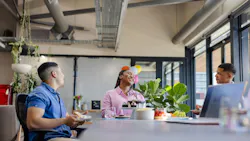
There are intentional breakrooms. And then there are the ones where somebody figured out how many tables and chairs would fit, added some vending machines, and called it done.
Aaron Lawton has seen plenty of both.
The founder of Oasis Breakroom Services in Boise, Idaho, believes the breakroom can be the “heart of the workplace,” much like the kitchen traditionally has been the heart of the home.
That doesn’t require a ping pong table or the latest workplace perk, he says. It does require somebody to think about what employees are supposed to get from the space.
When speaking with Bob Tullio for the Vending & OCS Nation podcast, Lawton shared six ways he puts that approach to work at Oasis — tips that other convenience services operators can put to work.
1. Start with why
Lawton’s biggest criticism of traditional breakrooms is simple: They are often an afterthought.
Companies scrutinize the rest of the workplace. How should the conference rooms function? Who needs an office? Where do the sit-stand desks go?
Then they get to the breakroom, and instead of the same thoughtful planning, they simply optimize it for how many bodies they can fit into whatever space remains.
Lawton thinks the better question comes first: “What is the purpose of that space?”
Maybe the client wants a place where people talk to each other. Maybe food should be the centerpiece. There isn’t one answer.
But there should be an answer — a purpose. Start by asking the client, “What do we want employees to feel when they walk in here?” Lawton said.
2. Don’t plaster your name all over it
Micro markets changed the look of breakrooms. Brighter LED lighting, open coolers and better fixtures were a big step beyond a couple of square vending machines against the wall.
But Lawton doesn’t want an Oasis market to look like Oasis took over the room.
Many of his larger clients have marketing departments, brand standards and a pretty good idea of how they want their workplaces to look. Oasis works with them to create co-branded spaces that fit those standards.
“How can we help you design that, so that it’s your culture, not just Oasis everywhere?” he said. “It’s their breakroom, and we want to be part of that.”
3. Make friends with HR
Facilities directors are still the primary contact at many Oasis accounts. Lawton knows what they need from him: “Clean, filled and working.”
That’s the baseline. HR gives him room to do more.
Oasis created a training kit that HR and onboarding staff can use to help new employees set up their breakroom accounts. New hires also get a fixed-dollar amount to spend as a welcome gift.
Think about the difference that makes during onboarding, Lawton said. “You know, onboarding can be a little stiff. You have to learn to sit here, learn this policy, sign this form.”
Introducing the breakroom — the heart of the workplace — gives HR a chance to share something a bit different from that drudgery. Let’s go see the breakroom. Here’s a credit. Grab a sandwich or an energy drink.
Lawton calls himself the facility director’s “go-to guy” and HR’s “secret weapon.” The second relationship gives Oasis another way to make its service useful to the client.
4. Put food at the center
Lawton came into vending through a food-service company that made food from scratch. Good food has been part of his thinking about breakrooms ever since.
Oasis uses local manufacturers to bring in food alongside the traditional frozen choices. That doesn’t mean getting rid of the hot burritos and sandwiches people already buy. It means recognizing that a beautiful market full of food nobody particularly wants isn’t much of an employee experience.
“The food is a critical element,” Lawton said.
In fact, when it comes to creating the experience he wants in a client’s breakroom, Lawton said food is what he builds it around.
5. Don’t just open the market. Launch it.
Oasis makes a big deal out of new markets. It also makes a big deal out of some old ones.
“When we go into a new account, or even when we upgrade one of our original markets recently, we’re having big events,” Lawton said. “The breakroom is the heart of the workplace. We want people to gather there. We want to talk about — we’re breaking bread together. We want them to have a positive experience every time they go in there.”
The equipment matters. So does giving people a reason to walk over and see what’s new.
6. Be their guy
Ask Lawton for Oasis’ “secret sauce,” and he doesn’t point to technology, products or market design.
“Be their guy,” he said.
Some of Lawton’s customer relationships go back 25 years. He wants those clients to do business with Oasis 20 or 25 years from now, too. That starts with the facilities director, but it doesn’t stop there.
One of the things Lawton loved about being a route driver was spending 10 minutes in a breakroom and talking to a CEO, then a custodian, receptionist, intern or manager. He wants his delivery team to build those relationships today.
It’s a decidedly people-heavy philosophy for a business increasingly filled with technology.
Tune into the podcast
About the Author
 Linda Becker
Linda Becker
Head of Content
Linda Becker is head of content for Automatic Merchandiser and VendingMarketWatch.com, responsible for the brands’ overall content strategy, planning and performance. She oversees the creation and performance of editorial and multimedia content across platforms such as magazines, websites, webinars, podcasts, newsletters, videos, social media, events and eBooks.
Since joining Automatic Merchandiser and VendingMarketWatch.com, Linda has developed a new appreciation for the convenience services industry and its essential role. She is dedicated to serving readers by covering the latest news in the vending, office coffee service and micro market industry. She can be reached at 262-203-9924 or [email protected].