EngineTest’s diagnostics kiosk offers a true passive income opportunity for operators
There is no shortage of online hype about vending being a passive income business. “Set it and forget it.” As many newcomers quickly learn, traditional vending is anything but a passive investment.
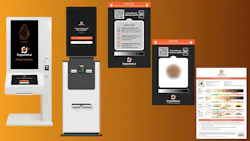
A new kiosk set to launch has the potential to qualify as a true passive investment for operators, requiring little effort after installation.
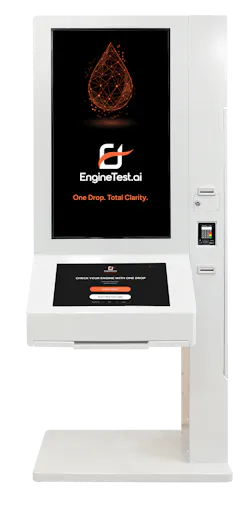
EngineTest, a kiosk-based automotive diagnostic solution, is introducing a concept that blends AI-powered analytics, digital signage and self-service convenience, creating what its founders describe as “a laboratory for your car, delivered through unattended retail.”
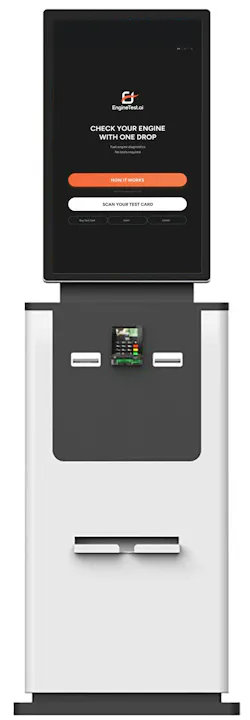
At its core, EngineTest allows consumers to analyze the health of their vehicle using a single drop of engine oil, but behind that simplicity is a decades-long evolution of technology.
The original concept dates to the early 2000s, when German inventor Gert Horstmeyer developed a manual oil analysis method using chromatography paper. A drop of oil would spread across a specially designed card, producing a visual pattern that could be compared against reference samples to identify potential engine issues.
By 2015, that analog process had been digitized. A compact scanner and software platform were introduced, enabling image capture, cloud-based analysis, and eventually AI-driven diagnostics. The system gained traction in the B2B automotive market, particularly among workshops and parts distributors, with large-scale adoption in Europe.
The leap to unattended retail came when electronic engineer Theo Leonidou, whose background includes building large-scale digital signage networks across Europe, recognized an opportunity to bring the technology directly to consumers.
“I immediately saw how this could move beyond garages and into the public,” Leonidou explained. “With my experience in interactive systems and digital signage, the kiosk model was the natural next step.”
Leonidou explained that his research shows that in addition to the general public, who can avoid costly repairs using EngineTest, the kiosk is a great fit for used car buyers, classic car owners, automotive enthusiasts and performance car owners.
A simple consumer experience
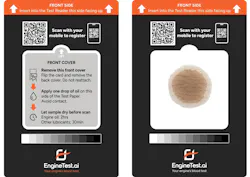
The EngineTest process is intentionally straightforward. A user purchases a test (typically priced around $25), receives a specially designed card, and applies a single drop of engine oil using their vehicle’s dipstick, or a free dipstick available at the kiosk. After a brief drying period, the card is inserted back into the kiosk, where it is scanned and analyzed.
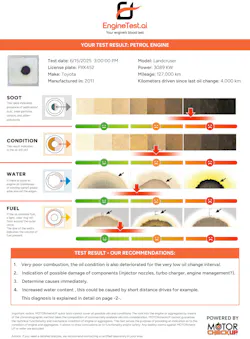
Within minutes, the user receives a detailed diagnostic report, often spanning multiple pages, highlighting key indicators such as contamination (soot and particles), oil condition, and the presence of fuel or water. The system also provides recommendations, helping users understand potential issues and next steps.
Beyond diagnostics, the platform integrates with a companion app that can connect results to recommended products, such as filters, oil types or maintenance solutions, creating a business opportunity for the kiosk’s retail host — or an advertiser on the digital display.
High margins, minimal maintenance
While the consumer-facing technology is compelling, EngineTest’s business model offers some attractive features.
For operators, the kiosk represents a non-food, high-margin opportunity in a space that is now increasingly crowded by traditional vending and micro markets. Each test card carries a strong margin, roughly a $15 spread between wholesale and retail pricing, while the machine itself requires minimal servicing beyond restocking cards and basic upkeep.
“There is essentially no technical maintenance required,” Leonidou said. “Operators can monitor everything remotely — inventory levels, usage, performance — through a centralized dashboard. Even conservative usage projections, three to five transactions per day, can generate meaningful monthly revenue, with the potential for significantly higher volume in high-traffic locations.”
One platform, three revenue streams
- Transaction revenue
Each diagnostic test generates direct income, forming the foundation of the business model. - Digital signage advertising
Every kiosk includes a large-format screen capable of running paid advertising. Leonidou said his team is actively discussing partnerships with digital signage brokers with an eye toward providing operators with an ongoing percentage of the advertising revenue. - Data monetization (Future opportunity)
As networks scale, aggregated, anonymized data on vehicle health trends will provide value to automotive brands, suppliers and service providers.
Together, these streams create a diversified income model that can accelerate return on investment — typically less than one year, according to Leonidou.
A wide range of high traffic locations
EngineTest’s flexibility opens the door to a variety of placement opportunities. Ideal locations include:
- Car washes
- Gas stations
- Auto parts retailers
- Shopping malls and parking facilities
- Truck stops
- Large grocery and drug store chains
- Hardware and home centers
Leonidou pointed out that the concept also aligns with broader retail trends. Fuel retailers, for example, are increasingly focused on keeping customers on-site longer, adding food, beverage, and service offerings. “EngineTest fits naturally into this strategy by introducing a new, automotive-focused engagement point,” he said.
A new path for small operators
Perhaps the most intriguing aspect of EngineTest is its appeal to smaller, independent operators.
In an industry where “passive income” is often more promise than reality, this platform comes closer to delivering on that ideal. With limited-service requirements and multiple revenue streams, it offers a way for operators to diversify beyond traditional vending routes.
“This gives operators access to locations they might not otherwise reach, car washes or auto-focused environments,” Leonidou notes.
What’s next: U.S. pilot programs
EngineTest is currently in early-stage deployment, with initial prototypes already installed in select locations overseas. The company is now preparing for pilot programs in the United States, with discussions underway involving major automotive retailers and potential partners.
The call to action from Leonidou is clear: operators interested in participating in early deployments are encouraged to engage now.
As unattended retail continues to evolve, EngineTest represents a compelling glimpse into its future, one where vending machines don’t just dispense products but deliver insights, services and entirely new categories of value. “I think we’ll be an excellent candidate for Imagination Way at the 2027 NAMA Show,” Leonidou said.
For more information about EngineTest:
- Email Theo at [email protected]
- Visit the enginetest.ai
About the Author
 Bob Tullio
Bob Tullio
Bob Tullio is a content specialist, speaker, sales trainer, consultant and contributing editor of Automatic Merchandiser and VendingMarketWatch.com. He advises entrepreneurs on how to build a successful business from the ground up. He specializes in helping suppliers connect with operators in the convenience services industry — coffee service, vending, micro markets and pantry service specifically. He can be reached at 818-261-1758 and [email protected]. Tullio welcomes your feedback.
Subscribe to Automatic Merchandiser’s new podcast, Vending & OCS Nation, which Tullio hosts. Each episode is designed to make your business more profitable.