Brinton Business Ventures at 50: From vending to micro markets — and what comes next
Highlights
- 50 years of evolution: Brinton Business Ventures has evolved with the convenience services industry, sometimes leading the change.
- From vending to micro markets to smart coolers: From its beginnings in traditional vending machines, the company has embraced micro markets, which now account for more than half of BBV’s business. Traditional vending is about 10%.
- The next generation: Kevin Brinton joined BBV in 2024, bringing a technology- and data-focused approach to the family business as it embraced smart markets.
- Technology with a purpose: Kevin Brinton is pushing AI, automation and data tools that produce measurable operational impact.
- Still willing to change: BBV is exploring smart-store formats while judging new technology by customer experience and ROI.
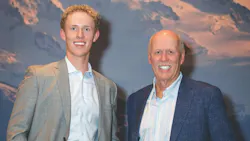
Fifty years after Jim Brinton started a vending business before he had even graduated from high school, the company he built looks very different from the one he founded. That is partly because Jim has never been particularly sentimental about the equipment that got him there.
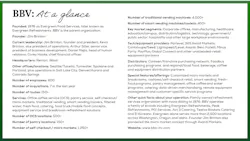
Traditional vending — once nearly all his business — now accounts for roughly 10% of Brinton Business Ventures’ business, according to his son, Kevin Brinton. More than half is now micro markets, with pantry and office coffee service making up much of the rest. BBV also operates smart coolers, produces fresh food and owns catering businesses.
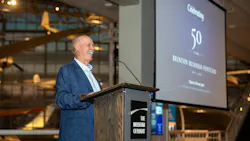
BBV now operates across Washington, Oregon, Idaho, Utah and Colorado. It has grown both organically and through acquisitions, including seven in the past year.
And now, for the first time in the company’s history, Jim Brinton is building its future alongside the next generation. Kevin Brinton joined BBV in 2024 and today serves as vice president of operations, overseeing Evergreen Refreshments’ operations in Seattle, Tumwater, Portland and Spokane. At 50, BBV is again changing the business that got it here — this time with a new generation helping decide what comes next.
Kevin’s ambitions build on that foundation.
“I really want us to be the most tech-forward, premium service foodservice provider in the United States,” he said. “The most important thing is working from the customer experience backward and then using technology to do that.”
Building the foundation
Brinton Business Ventures traces its roots to April 1, 1976, when Jim Brinton incorporated the business that eventually became Evergreen Refreshments. He graduated from high school a little more than two months later.
The beginnings were modest. Jim bought used vending machines, refurbished them and reinvested money into the fledgling operation while working other jobs.
It wasn’t always a smooth climb. “I was at times riding on the edge of survival,” he said.
Those years also taught Jim lessons about capital that he still emphasizes to operators today. “I knew that I was going to run out of money long before I ran out of ambition,” he said.
The pivot to self-checkout
By 2008 and 2009, Jim had spent more than three decades in vending and was increasingly frustrated with what he saw.
The country was in a recession, and operators were struggling. Jim, then active in industry leadership at NAMA, was traveling the country and hearing many of the same concerns from operators.
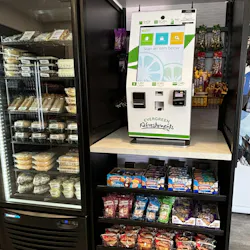
Then the self-checkout concept caught his attention. Earlier systems had relied on RFID tags attached to individual products. Jim and his partners instead developed a system that used the barcodes already on products, just as consumers became increasingly comfortable with self-checkout in grocery stores and other retail settings.
The result was Avanti Markets.
Jim doesn’t claim sole credit for what followed. He describes himself as an operator who happened to be in the right place at the right time, with industry relationships that allowed him to persuade other operators to test the concept.
But micro markets fundamentally changed his own company. “When we started Avanti Markets, obviously I was almost 100% vending,” Jim said.
Micro markets opened the door to hundreds of SKUs rather than the few dozen that could fit in a traditional vending machine. They made fresh food more practical. They also let operators rethink the breakroom itself.
“What we’ve done with micro markets was create a destination,” Jim said. “We created a place where employees could go, and they felt good about the food that was there.”
For Jim, the lesson wasn’t allegiance to the micro market. It was what a better format could do for the customer. That may explain why Jim is comfortable with newer technology eventually displacing some of what he helped build.
“If innovation carries it, and micro markets were just a stepping stone to what’s ahead to make operators better, take care of our customers better, and so forth, so be it,” he said. “I’ll just know that I helped create that bridge from traditional vending to wherever technology takes us.”
Turning one operation into a family of businesses
The original Evergreen operation has since grown into Brinton Business Ventures, the parent organization for a collection of refreshment and foodservice businesses.
BBV’s expansion beyond Evergreen has come through startups, organic growth and acquisitions, often rooted in relationships Jim built through the industry. Peak Refreshments in Colorado began as a startup with Brian Faley, who now runs BBV’s Colorado operations. PGI Services came through operator Mike Brown, an early Avanti Markets customer with operations in Utah and Colorado who was nearing retirement.
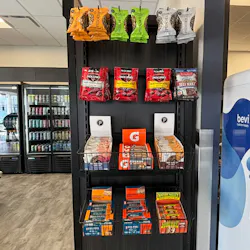
Other deals followed relationships built over years in the industry. Along the way, Avanti Markets merged with 365 Retail Markets in 2021. In 2025, BBV acquired Empire Vending, a Canteen franchisee in Spokane. The company subsequently acquired Premier Canteen in Salt Lake City. BBV became a Canteen franchisee on January 1, 2025.
“When you get into new territories, and you want to grow a little faster, acquisitions are usually where those come about,” he said.
Yet, BBV has resisted turning its collection of regional businesses into a single consumer-facing identity. The operating companies retain identities tied to the markets they serve while falling under the BBV umbrella.
Adding food to the equation
One piece Jim believed was missing was catering. He began exploring acquisitions in 2019 because BBV’s refreshment customers also held meetings, celebrations and other events that the company couldn’t fully serve.
Then COVID-19 arrived.
Catering kitchens went dark while many BBV micro markets still needed food. Jim acquired two catering companies during the pandemic, putting their kitchens back to work producing food for BBV locations.
For Kevin Brinton, producing food internally is more than another revenue stream. “It’s a competitive advantage,” he said.
The next generation wasn’t always interested
For a family company celebrating its 50th anniversary, the arrival of the founder’s son might sound inevitable. It wasn’t.
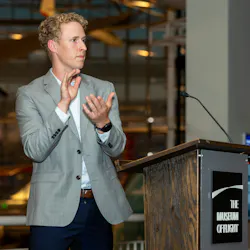
Jim Brinton deliberately kept his children at some distance from the business when they were growing up. Kevin, meanwhile, wasn’t particularly attracted to the vending industry he saw as a child.
“The idea of being a business owner aligned with my goals and aspirations, but probably the vending industry in itself didn’t,” Kevin said.
One reason was technology. Growing up in the Seattle area, Kevin saw technology moving rapidly in industries around him while vending appeared slower to change.
Slowly, technology began shaping convenience services in new ways. Micro markets became mainstream. Smart coolers, computer vision and just-walk-out technology followed.
“That’s kind of transformed and enabled operators to actually be tech-forward,” he said.
Kevin eventually focused on finance and data analytics at Anderson University in South Carolina. Private equity and investment banking interested him, reinforced in part by watching Avanti Markets merge with 365 Retail Markets, Kevin said.
Before joining BBV full time, he spent several weeks at Monumental Markets in the Washington, D.C., area, working throughout the operation “from driver to boardroom.” He also visited other operators, including Cromer Food Services in South Carolina and Trolley House Refreshments in Virginia.
Kevin now says he wishes he had spent even more time working outside the family company because of the value of seeing how other businesses operate.
Using AI to do more with the same people
Technology now takes up a significant part of Kevin’s role as BBV migrates operating systems, integrates platforms inherited through acquisitions and develops internal reporting. He is also pushing the company to use AI and automation, but his goal is not simply to reduce headcount.
“I’d say that we take the other stance … which is saying we want to do more work with the same people,” he said.

BBV is applying those tools to financial reporting, product analysis, merchandising and other repetitive work, with the aim of moving employees toward higher-value tasks. Kevin sees a larger opportunity as systems become more integrated and operators can put their transaction data to work more easily.
But, he is wary of technology projects that sound impressive and accomplish little.
“I want them to actually quantify the impact of what they’re working on,” he said. “If my drivers in Seattle don’t feel the impact of this driver solution you’re putting in place, and I can’t go ask them how this has changed their experience, then it’s useless.”
BBV is using AI tools for financial data aggregation, reporting and product analysis. Kevin sees further opportunities in merchandising and customer onboarding, where information from multiple sources can be brought together to create more tailored pre- and post-installation processes. The convenience services business is particularly suited to that kind of analysis because every transaction creates another data point, he said.
“We actually are a very data-rich business when you talk about the micro-transactions that occur day to day,” Kevin said.
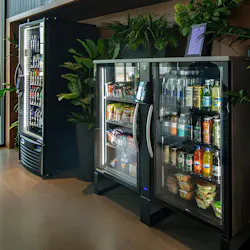
One word comes up repeatedly when Kevin talks to BBV employees: impact. When someone proposes a new tool or process, he wants to know who it will affect, how it will affect them and whether the result can be measured. That philosophy helps connect his technology focus to something much more traditional in the Brinton business: relationships.
Despite all of his interest in AI, automation and data, Kevin says customer relationships remain his favorite part of the job. He encourages employees to know their contacts as people — to understand their interests, families and what matters to them.
“That’s never going away, I don’t think, in our world,” he said.
Jim Brinton also puts relationships at the center of BBV’s longevity — with employees, customers, suppliers and even competitors. They helped open doors when he was introducing micro markets and later when BBV began expanding through acquisitions.
What comes after the micro market?
BBV’s current mix offers one clue about where the company is heading. Micro markets remain BBV’s foundation, while Kevin said pantry is growing and office coffee remains relatively steady.
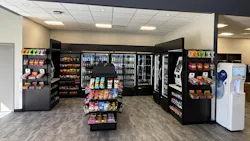
Kevin expects computer vision and other smart-store formats to become increasingly practical as hardware costs decline and operators become more comfortable calculating the return.
“It comes down to a pro forma at the end of the day,” he said. “Does this location generate the sales to pay back for the cost of the unit?”
As costs come down, Kevin expects smart formats to make sense in a broader range of locations. That doesn’t mean BBV expects vending to disappear. “I think there’s always going to be a place for vending,” Kevin said.
When Automatic Merchandiser last profiled Brinton’s operation a decade ago, micro markets were already reshaping the business. Today, BBV is again weighing a new generation of technology against the same basic question: Does it make the customer experience better enough to change the way the company operates?
What carries forward
Jim no longer worries much about succession. Kevin’s arrival, he said, gave him “another shot in the arm” and answered a question he once wasn’t sure the family business would answer at all.
“I did this for the first 35 years. It seems like I kind of wasted my time,” Jim said of the years before micro markets accelerated the company’s growth. “But I didn’t waste it. It was all building a foundation.”
When BBV reaches 75, he hopes that foundation is still visible — along with what Kevin built on it.
“I just want it to continue to be a great place to work,” Brinton said. “I want us to still keep the reputation that we’ve developed out there, that we serve our customers and that we’re a very important tool for people in the at-work environment.”
About the Author
 Linda Becker
Linda Becker
Head of Content
Linda Becker is head of content for Automatic Merchandiser and VendingMarketWatch.com, responsible for the brands’ overall content strategy, planning and performance. She oversees the creation and performance of editorial and multimedia content across platforms such as magazines, websites, webinars, podcasts, newsletters, videos, social media, events and eBooks.
Since joining Automatic Merchandiser and VendingMarketWatch.com, Linda has developed a new appreciation for the convenience services industry and its essential role. She is dedicated to serving readers by covering the latest news in the vending, office coffee service and micro market industry. She can be reached at 262-203-9924 or [email protected].