Five Star Breaktime Solutions grows on service, scale and a retail mindset
Operator takeaways
- Growth depends on more than adding accounts. Look for ways to retain, grow and expand service within existing locations.
- Treat micro markets like retail, not vending. Product mix, pricing, promotions, placement and out-of-stock performance all shape repeat use.
- Design programs around the client’s workforce and goals, not a standard equipment package.
- Service still carries the sale. Follow-through, consistency and relationship management are what turn new business into long-term business.
- Use data and technology to make faster decisions, but keep the business people-driven.
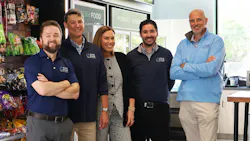
Chattanooga-based Five Star Breaktime Solutions did not build one of the largest footprints in the Canteen franchise network by chasing novelty. It grew by doing the basics well — consistently, across thousands of locations.
That discipline shows up in how the company manages client relationships and day-to-day operations — the things that actually define success in this industry. Five Star has completed nearly 100 acquisitions, but that number alone doesn’t explain its scale.
Retain, grow and expand. Simple to say. Harder to execute — especially as an operation scales. For Five Star, it has become a defining principle.
From acquisition to account growth
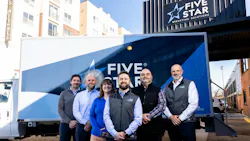
Five Star’s expansion has been fueled in large part by acquisition, a common strategy among larger operators. What distinguishes the company is its approach to integrating and nurturing its client relationships.
Rather than treating acquired locations as static revenue sources, Five Star looks for ways to expand services within each account. A vending-only stop might become a micro market. A micro market might grow into a full refreshment program — coffee, water, pantry, fresh food and dining.
“You earn that business by your reputation and your service — by how you treat your current customers,” said C. J. Recher, vice president of marketing. “With each client, we ask: how can we continue to help them take care of their people? That’s a win for both of us.”
A retail mindset reshapes the breakroom
A key shift came during the pandemic. Five Star stepped back and looked at micro markets and the broader breakroom environment differently. Instead of treating them as extensions of vending, the company started running them like retail operations. That meant looking outside the industry for benchmarks.
“We started to study how other retailers went about business and really focus on the consumer experience,” Recher said.
The change was not theoretical. It led to the development of a dedicated category management team, a more structured promotional strategy and increased use of data to guide decisions on product mix, pricing and placement. It also reinforced the idea that the breakroom is competing with every other retail option available to the employee.
“We’re competing with Starbucks, Circle K — all of them,” said Stefanie Oller, senior vice president of sales. “They’re going to get that coffee or that drink somewhere. We want that somewhere to be our breakroom.”
Oller emphasized that this mindset is part of the Five Star approach from the boardroom to each front-line team member, as a reminder that they deliver more than convenience: The Five Star team delivers consistency, availability and a product mix that reflects what consumers expect in their convenience services.
“The first time you burn someone — their Diet Dr. Pepper isn’t there — they’re going to quit coming,” Oller said.
Designed around the client, not a playbook
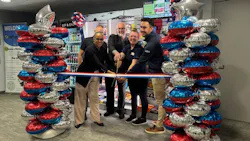
In many companies, growth brings standardization. At Five Star, the focus remains on building the right program for each account rather than forcing them into a standard model.
Each new account starts with a detailed look at the client’s workforce, needs and goals. The point isn’t to install equipment, Oller said. It’s to design a program that fits what the client is actually trying to do — whether that’s improving retention, supporting recruiting or building a better workplace culture.
“We create custom programs for every single client. It’s not cookie-cutter,” Oller said. “Procurement may have a very different goal than what human resources has. Human resources may have a different goal than what plant management has.” The resulting program must balance those needs.
“We create a program that becomes part of their culture — not just a couple of vending machines and a micro market,” Oller said.
It’s an approach that mirrors what’s happening across the industry. Clients aren’t buying equipment or products anymore. Instead, they’re buying outcomes — employee satisfaction, retention or a reason for people to show up.
Service as the foundation
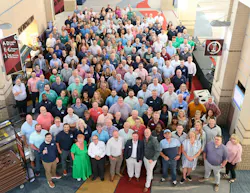
All of it — the retail strategy, the data investment, the category management — still comes back to service at Five Star. The company emphasizes dependability, consistency and follow-through as core expectations across the organization. That focus is reinforced by a culture that prioritizes humility and accountability.
“We’re going to do what we said we’re going to do,” Recher said.
To back that up, Five Star added a layer of customer support beyond traditional route ops, Oller explained. These customer success managers maintain relationships, audit performance and ensure that what was promised during the sale is actually delivered. “They maintain that relationship and make sure we’re hitting on all cylinders,” Oller said.
Fresh food, pantry and beyond
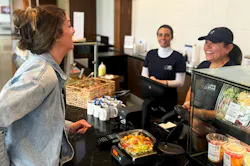
As client expectations have evolved, so has Five Star’s service mix. The company has expanded beyond traditional vending and micro markets to include fresh-food programs, pantry services and dining solutions.
“Our fresh food is often one of the reasons why we earn new business. It’s really good food, at a good value,” Recher said.
With company-owned production facilities in LaFayette, Ga., and Cincinnati, Five Star can deliver fresh-food quality and consistency across the Southeast — supporting both micro market and dining programs.
At the same time, pantry and subsidized programs have gained traction as employers look for ways to attract and retain workers in a competitive labor market.
“I think if anything good came out of COVID, it was that we’ve got to create a great space, and also employers need to create a space that is almost as comfortable as home. It gives a reason for people to come back into the workplace,” Oller said.
Data, technology and the role of AI
Technology is a key aspect of Five Star’s success. The company has built internal business intelligence tools and is working to connect data across its systems into a unified environment.
“We’re building an architecture where we can access it all and connect it,” Recher said.
That foundation is making more advanced analytics possible — including AI tools that streamline decision-making. Tasks that once took hours now can take minutes, freeing teams to focus on interpreting data instead of chasing it.
“The speed at which you can make decisions improves the experience in the breakroom,” Recher said.
Even as the company leans into technology, leadership is clear that the business remains fundamentally people-driven.
“We are so people-driven and relationship-driven,” Oller said. “It’s about using the tools to make us stronger, not replacing the people.”
Feeding the Future
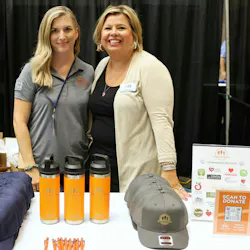
In 2017, C. J. Recher and a group of Five Star leaders had a straightforward idea: Tie a cause to a micro market sandwich promotion and see what happened. A 25-cent donation per sandwich generated roughly $7,000 in the first month. That was enough to turn the cause marketing experiment into something bigger.
Feeding the Future was launched as a formal nonprofit focused on childhood hunger — specifically, getting meals to kids during the hours schools don’t cover. In addition, employee contributions and company matching funds are donated to Feeding America food banks across the communities Five Star serves, so the money stays local.
The numbers have grown steadily. As Five Star expands into new markets, it adds new food bank partners to match. More than 600 Five Star employees contribute through payroll deductions, and supplier partners and industry stakeholders have joined in. According to Recher, the non-profit raises around $200,000 a year and has surpassed $1 million in total donations since its founding.
“It’s become part of our values set,” Recher said. “People gravitate toward companies that believe in giving back and doing good.”
For an operator whose business is moving food and beverages through the workplace every day, addressing food insecurity outside of it isn’t a stretch. For Five Star, it’s become an expectation.
Commitment drives success
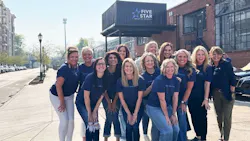
“We have a dogged commitment to each other, the mission and not being complacent,” he said. “Everybody is focused on operational excellence, and humble enough to work together for that.”
It’s important to ask, “How can we continue to add value to both the client and the employee?” Recher added. “We have the ability to impact somebody’s day in a positive way.”
It’s a simple idea, and a durable one. As Five Star keeps growing, the focus doesn’t change: execute well, build relationships, and don’t lose sight of what got you there. ■
Operation Profile: Five Star Breaktime Solutions
- Founded: 1993
- Affiliation: Became a franchise of Canteen in 2008
- Current leadership: Richard Kennedy, president and CEO; Mike McLean, chief financial officer; Tom Kuharcik, chief operating officer; Erik Spofford, chief technology officer; Kevin Clark, executive vice president, operations; Stefanie Oller, senior vice president, sales
- Headquarters: Chattanooga, Tenn.
- Number of offices: 48
- Number of employees: 2,700
- Number of acquisitions: 98
- Services: Micro markets, vending, office coffee service, water, pantry, foodservice and dining
- Routes: 685 in total. 610 market/vending, 75 coffee/water/pantry
- OCS locations: ~10,000, including water and pantry
- Self-checkout and micro markets: 6,000
- Traditional vending machines: ~45,000
- Foodservice or dining locations: 70
- Fresh-food production facilities: Two company-owned facilities. The primary is in LaFayette, Ga., and a second is in Cincinnati. Both are FDA-registered facilities with USDA on-site.
- Special offerings: refive market® rewards program, Conti Coffee®, Harvest + Main high-end fresh food
- Website: fivestarbreaktime.com
About the Author
 Linda Becker
Linda Becker
Head of Content
Linda Becker is head of content for Automatic Merchandiser and VendingMarketWatch.com, responsible for the brands’ overall content strategy, planning and performance. She oversees the creation and performance of editorial and multimedia content across platforms such as magazines, websites, webinars, podcasts, newsletters, videos, social media, events and eBooks.
Since joining Automatic Merchandiser and VendingMarketWatch.com, Linda has developed a new appreciation for the convenience services industry and its essential role. She is dedicated to serving readers by covering the latest news in the vending, office coffee service and micro market industry. She can be reached at 262-203-9924 or [email protected].