Fresh food, disciplined growth and a 70-year family playbook
Most convenience services companies begin with a route. Sheehan Brothers Vending began with a gumball machine — and a family willing to take a chance.
In 1956, brothers James and Dennis Sheehan purchased a small gumball route in Springfield, Ohio, hoping to earn a bit of extra income while keeping their full-time jobs. The idea worked. One route became several. Soon, vending machines followed, and what began as a side hustle (before “side hustles” were a thing) evolved into a full-time business run out of the family garage. The brothers eventually moved their business into a permanent facility.
“That’s just where everything took off,” Patrick Sheehan said. “One gumball route turned into three, turned into six.”
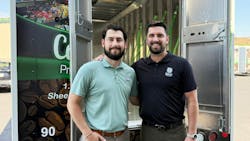
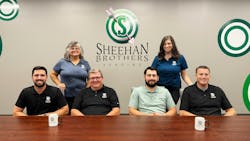
Seven decades later, Sheehan Brothers remains family-owned, now led by third-generation executives Patrick Sheehan, president, and Michael Sheehan, vice president. Under their leadership, the refreshment services operator has a growing regional footprint across Ohio and Northern Kentucky, anchored by micro markets, fresh food, vending and office coffee service.
After gumballs, the one that really mattered
Every leader of an independent, multigenerational convenience services business faces those moments when they must choose the path forward. For Sheehan Brothers, a key moment was when Dan Sheehan had to decide whether to prioritize short-term revenue or long-term sustainability.
At one time, the company operated manual foodservice and cafeteria-style programs, serving large customers. The work generated revenue but demanded heavy labor and complicated logistics, yet produced thin margins. Dan Sheehan, James Sheehan’s son, and Maribeth Mahoney, Dennis Sheehan’s daughter, who together led the company at that time, ultimately chose to exit the segment entirely, even though doing so meant losing the company’s six largest accounts.
“But, we just were losing money hand over fist on manual food,” Michael Sheehan said. “Getting out of it was the best thing that ever happened to Sheehan Brothers.”
Patrick Sheehan said that philosophy — protect the fundamentals first — still shapes how he leads the company. His father emphasized operational efficiency and profitability above all else, and that approach continues to guide how he and Michael evaluate new products, services, acquisitions and expansion opportunities.
That long-term mindset has allowed Sheehan Brothers to grow deliberately, he said.
Outside experience reshapes the third generation
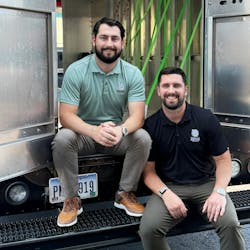
Third-generation family members often feel pressure to join the business. But, while both Michael and Patrick Sheehan worked at Sheehan Brothers while growing up, their decision to join the company came only after they had spent time in Chicago building careers. Both say those experiences — which gave them outside perspectives that continue to influence how they approach leading Sheehan Brothers — were invaluable. Patrick worked in logistics, learning about systems management, performance tracking and operational structure while Michael worked in staffing, gaining experience in recruiting, retention and workforce development. All are invaluable skills in a labor-intensive service industry.
When Patrick returned to Springfield in 2016, he saw immediate opportunities to modernize the company’s infrastructure and improve its processes. Many systems were still manual. Sales tracking was limited. Reporting lacked consistency.
Among the early technology additions was CRM software to help the company better manage its sales pipeline and improve its reporting. Patrick also focused on expanding underdeveloped service segments — particularly office coffee — while putting the operational pieces in place to support future growth.
“I just got obsessed with making real-world changes and seeing it show up on the next month’s income statement,” he said.
The results came quickly. Revenue grew, the team expanded and the company began building an organization capable of supporting long-term expansion.
Michael joined the company in late 2019, bringing complementary strengths. The brothers intentionally divided responsibilities — Patrick overseeing sales, finance and strategy while Michael leads operations and execution — in a structure designed to support growth while maintaining accountability.
Another turning moment: The pandemic
Michael’s return coincided with a period of major transition for Sheehan Brothers Vending — and the rest of the world. In 2019, Dan Sheehan bought out Maribeth Mahoney and began investing heavily in a new commissary facility next to the company’s Springfield headquarters. It would give Sheehan Brothers the capacity to meet rising demand for fresh food and expand.
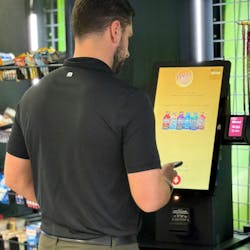
Then COVID-19 arrived.
Like operators across the country, Sheehan Brothers faced uncertainty as customers cut staff, shifted to remote work and closed offices. But Sheehan Brothers’ customer mix, heavily concentrated in manufacturing, logistics and distribution facilities — as well as its commission-based approach to drivers’ compensation — provided resilience. Many of its customers’ facilities remained operational as essential workplaces, allowing the company to maintain service and stabilize revenue faster than operators that relied primarily on office environments.
“We left COVID the least unscathed out of any operator I’ve talked to because of our demographic,” Patrick said. “We never had to lay off more than a handful of employees for just a few weeks due to COVID.”
Yet the company was unable to avoid all of the effects of the pandemic. The bigger operational challenge came later.
As businesses and workplaces reopened, the labor market tightened dramatically. Recruiting and retaining route drivers became significantly harder, forcing Patrick and Michael to step in personally at times to keep service consistent.
“There were weeks where I was on the truck running routes and filling markets,” Michael said.
“The problem was, it felt kind of out of our control, too, because we were doing all the right things. We were really focusing on company culture, the workplace experience for the driver, for all the employees,” Patrick said.
The post-pandemic hiring challenges many companies faced continued until the company developed a strategic approach: interviewing even when all positions were staffed, to build a roster that could fill open positions quickly. By 2022, the staffing disruptions eased.
Building ownership into the route structure
Sheehan Brothers’ commission-based route-driver compensation is one aspect they credit for their success. Rather than relying solely on hourly wages, drivers earn a mix of commission and mileage pay tied directly to account performance. The Sheehans believe the structure encourages accountability and entrepreneurial thinking at the route level.

“My dad — I’ll never forget this line — would always say, ‘The same drivers that would come to me complaining about giving them new stops when they were paid hourly, came to me the very next day asking for more accounts after we switched everything to telemetry and commission,’” Patrick said.
Drivers at Sheehan Brothers have a strong sense of ownership over their routes and accounts, strengthening customer and driver retention.
“They’re going to make more money if their accounts are full,” Patrick said. “It turns the routes they’re servicing into like their stores.”
Telemetry and cashless systems provide real-time data to improve route efficiency and product mix. Drivers can service more locations strategically and reduce unnecessary stops.
Micro markets drive growth
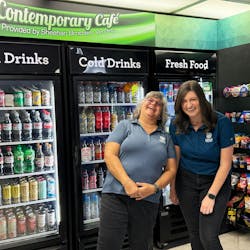
While vending remains an important service, micro markets have become Sheehan Brothers’ primary focus, and the largest share of revenue. The company installed its first micro market more than a decade ago and has steadily expanded since.
Micro markets also complement the company’s fresh food capabilities by providing space to showcase items that are difficult to sell effectively through traditional vending. Hundreds of installations later, the company continues to build markets as employers increasingly view breakroom quality as a workforce retention tool rather than simply an employee perk.
Managing freshness and giving back
If micro markets are the growth engine, fresh food is the company’s competitive edge.
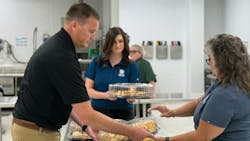
Sheehan Brothers operates its own commissary, producing sandwiches, wraps, salads, parfaits and other grab-and-go items daily. The Sheehans view the program as central to the company’s identity and a key reason that customers choose Sheehan Brothers over competitors.
“We all sell similar drinks and snacks,” Patrick said. “But not everyone has Sheehan Brothers’ fresh food.”
Producing food in-house gives the company control over quality, menu development and pricing. It also allows a faster response to customer preferences and ensures consistency across locations.
Running a large fresh food program requires careful inventory management. The Sheehans monitor spoilage closely, aiming to maintain full, appealing coolers while minimizing unnecessary waste.
Food that hasn’t sold by its sell-by date is returned cold and donated through Second Harvest Food Bank, which distributes meals across the community. Donation totals have increased alongside the company’s growth, with Sheehan Brothers Vending donating more than 300,000 pounds of fresh food — the equivalent of more than 250,000 meals — in 2025 alone.
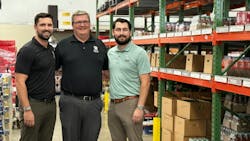
The donation program is part of a larger community outreach by the company, which also provided more than $100,000 in charitable contributions to organizations to the Greater Springfield Partnership.
Expansion beyond Springfield
For most of its history, Sheehan Brothers operated primarily from Springfield. That changed with the opening of the company’s first branch in northern Kentucky, expanding service into Louisville, Lexington and surrounding markets. The move followed a series of acquisitions that strengthened the company’s regional presence and added routes, customers and operational capacity.
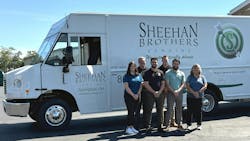
Leadership views the expansion as both a milestone and a template for future growth — proof the company can scale geographically while maintaining service consistency and operational control.
The expansion also reflects a broader strategy: deliberately expanding into adjacent markets as they make sense for Sheehan Brothers Vending.
“We just keep doing what we’re good at,” Patrick said, “and continue to focus on our customers and our employees.”
Nearly 70 years after a single gumball route launched the business, Sheehan Brothers Vending continues to evolve — combining family tradition, operational discipline and a modern approach to convenience services.
About the Author
 Linda Becker
Linda Becker
Head of Content
Linda Becker is head of content for Automatic Merchandiser and VendingMarketWatch.com, responsible for the brands’ overall content strategy, planning and performance. She oversees the creation and performance of editorial and multimedia content across platforms such as magazines, websites, webinars, podcasts, newsletters, videos, social media, events and eBooks.
Since joining Automatic Merchandiser and VendingMarketWatch.com, Linda has developed a new appreciation for the convenience services industry and its essential role. She is dedicated to serving readers by covering the latest news in the vending, office coffee service and micro market industry. She can be reached at 262-203-9924 or [email protected].