New Customer Data From USA Technologies Shows Cashless Sales 84 Percent Higher After One Year Of Cashless Adoption
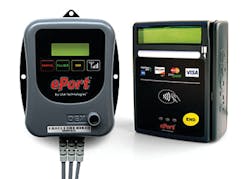
USA Technologies, Inc. (USAT) released new data collected from its 2012 knowledge base study that highlights the business-building benefits of cashless payment adoption realized by USA Technologies’ ePort Connect® vending customers. Most notably, the study revealed an impressive 84 percent increase in average annualized cashless sales in terminals that had adopted the cashless option for longer than one year compared to terminals using the cashless option for less than a year.
USAT evaluated data over a two and one-half month period from approximately 57,000 ePort Connect® cashless vending terminals across 39 different channels or industry sectors and customer types. From the 57,000 connections studied, USAT compared a subset of 27,000 terminals where ePort Connect service had been live for greater than one year (the “mature subset”) to 30,000 terminals that were in early adoption stage or had been live for less than one year with a cashless option (the “new installations” subset).
Major findings of the study include:
Mature installations have a higher percentage of cashless sales than new installations.
- Average annualized cashless sales per machine was $3,615 for the mature subset, a remarkable 84 percent higher than the $1,970 for new installations.
- For all 57,000 terminals studied, average annualized cashless sales per machine of $2,736 was 39 percent higher than the $1,970 for new installations only.
- The percentage of cashless to total sales was 24 percent for new installations compared to 33 percent for the mature subset – a nearly 10 percentage-point difference.
- For all 57,000 terminals studied, 27 percent of the sales were cashless.
The higher the vend price, the more consumers take advantage of cashless payment.
- The percent of cashless sales increased in direct proportion to an increase in the price of the average transaction.
- For the entire 57,000 terminals studied, annualized cashless sales as a percent of total sales was highest for $2.00 plus transactions--34 percent--compared to 21 percent for under $1.00 transactions.
Cashless acceptance is increasing across all channels—from manufacturing to higher education.
- The largest differences in average annualized cashless sales between new installations and the mature subset were in the healthcare, workplace and education channels.
- In the healthcare channel, average annual cashless sales for new installations was $1,656 compared to $3,092 for the mature subset, or an 87 percent increase.
- The workplace channel followed a similar pattern, with $2,072 for new installations compared to $3,871 for the mature subset, an increase of 87 percent; and
- In education, which tends to attract a younger population more accustomed to cashless options, new installation average annualized cashless sales per machine came in slightly higher, at $2,245, compared to $3,877 for the mature subset, which is 73 percent higher than in new installations.
“By bifurcating our data for this 2012 study, we were able to gain more visibility as to how consumers utilize our cashless payment systems over time,” said Jim Turner, vice president of business deployment planning for USA Technologies in a prepared statement. “One of the most interesting things we found is that while consumer adoption appears to be gaining traction at all locations, in locations where our ePort Connect service has been utilized for a year or more, the results were considerably more pronounced.
“This is great news for our customers that are either contemplating or at the early stages of cashless adoption,” continued Turner. “The results support our view that our customers should be able to realize more revenues the longer our cashless technology is installed on their machines. In addition, when customers take advantage of new offerings, such as our two-tier pricing program, we believe that the benefits to their bottom line are even more compelling.”
Michael Kasavana, Ph.D., National Automatic Merchandising Association's endowed professor in the school of hospitality business at Michigan State University added, “The thrust of advancement in technology is enhancing the consumer vending experience while improving the vending operator’s profitability. There is probably no more important aspect of this development than the acceptance of cashless transactions in vending, as a higher volume and greater variety of payment options benefit customers and vending operators alike. This industry data from USA Technologies is further evidence that consumers want to make vending purchases with cashless payments.”
Business Deployment Planning
With over 155,000 connections now on its ePort Connect service, USAT is in a unique position to use substantial real-life data to help make its customers more successful. Its deployment planning service was designed to guide operators to deploy cashless payments in the right locations, with the right settings and the right expectations for success. In addition, ongoing cashless performance optimization is performed to assist vending operators aiming for a high level of performance.
“Our 2012 knowledge base study gives us even more information about our customers and the business results they might expect when implementing the ePort Connect cashless payment and telemetry system,” said Mike Lawlor, senior vice president of sales and business development for USA Technologies. We also believe that the substantial improvements reported in cashless sales for the mature subset is beginning to translate to increased adoption of our service within our existing customer base.”
For more information regarding the 2012 knowledge base study, contact a USA Technologies sales representative at 1-800-633-0340 or access the executive overview at the following link: http://www.usatech.com/eport/downloads/USAT_KnowledgeBase_Study_2012.pdf