'V-Engineering' Part 3: How technology will impact and alter consumer purchasing in the future
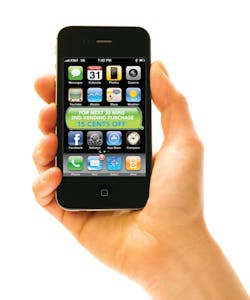
Marketing has evolved. Already we've seen the promotions from newspapers and magazines evolve for television, and then change futher for use with search engines and social media sites. Now marketing messages to the consumer have transitioned into mobile devices. Smart-devices, like the iPhone, Android phone and Blackberry, have access to application software capable of immediately impacting and altering consumer purchase behavior. Specifically affected is how a shopper locates, interacts and tracks purchases at various points-of-sale (POS), including unattended POS locations like vending.
Among the most popular mobile device application downloads are location-based services (LBS); software capable of creating commercial touchpoints that otherwise would not exist. Simply stated, an LBS application enables a user to search and locate registered sites, as well as receive promotional sales incentives from those sites based on proximity, product offerings or past product purchases. In the case of vending, for example, a location-based service is under developmental consideration that will enable a consumer to find the nearest vending machine offering a category of products desired (e.g. snack foods, cold beverages, hot beverages, frozen treats, etc.). When the consumer clicks a smartphone icon, an area map would be displayed indicating the nearest specialty vender. While this may seem like a sci-fi scenario from the distant future, this next-generation application is expected soon.
Reach out to customer with geo-fencing
Geo-fencing is defined as a push technology that enables an entity (e.g. vending machine) to broadcast digital messages when a mobile device has been carried into an active signal area or a time-sensitive sales campaign has been invoked. Simply stated, geo-fencing creates a virtual area around a particular location or object. When a consumer’s recognized mobile device enters this active area, a pre-determined, proximity-based message can be "pushed" to the device. It is important to note that the consumer’s mobile device may need to be registered with the vending operator to serve as a push target.
A push service can be activated by an event (e.g. consumer arrives in a targeted area) or be a dynamic, time-dependent promotion (e.g. for the next thirty minutes a second purchase at any vending machine will be 15 cents off). Dunkin’ Donuts, for example, is credited with being among the first business to use push-based promotions to notify consumers when they are in close proximity to a store. The consumer, who opted-in (registered) with the company’s LBS application software, receives a push notification whenever his/her mobile device is detected near an outlet. The notice might contain a mobile discount, reward points bonus or other promotional gains. Push information is typically formatted to location, time, user preference and customer relationship management (CRM) data.
Location-based services focus on innovatively combining online and offline media in a manner that successfully promotes the sale of goods and services at the point of sale. Forrester Research predicts that by 2015 eighty-two million people will rely on mobile devices as a primary reference tool for selecting refreshment and entertainment venues. Through the use of a mobile device, a consumer is able to receive timely announcements, alerts, promotions, discounts and geo-sensitive offerings along with the ability to store purchase history, loyalty rewards and a host of related concierge services. It is estimated that there are several hundred million active cellular network subscribers and with such a large number of users, it is critically important that vending machine operators recognize the unparalleled competitive advantages that can be gained from effective LBS applications. There is intuitively more value in knowing where consumers are located than where vending machines are positioned and LBS applications make this a possibility.
Monitor machines with QR codes
Quick response (QR) codes can be useful for engaging a consumer as well as product information. QR codes can offer machine monitoring, where the vending operator creates a QR code for each vending machine in the field (machine identification coding) and places the code prominently on the machine. When a consumer encounters a problem with a machine (e.g. lost money, product hang-up, inability to accept payment, service required, etc.) the consumer can use a smartphone to scan the machine’s QR code and be automatically connected to the vending operator’s mobile webpage, which has a recode of the code, and therefore the machine that is experiencing the problem. The Webpage displays a preset list of problems. The consumer merely touches or clicks the problem and a report identifying the machine, time and description of the problem are sent via SMS text message or email to the operator. As problems are reported, the operator is able to take appropriate corrective action, including initiating a refund, activating remote repairs or for scheduling a service call. Through a simple tabulation algorithm, the mobile website tracks which machines have experienced problems and the frequency of reported problems. Such an analysis can be critical to ensuring continuous operations, at minimal cost. This application also has the advantage of providing a pathway between consumers and a vending operator. This direct interaction can be beneficial in future site negotiations as well as produce high performance evaluations.
QR codes can also be placed on each product, or displayed on a video screen if desired, for product merchandising and promotion as well as product nutrient and ingredient disclosure. The ability to adhere to impending government regulations related to calorie disclosure may be satisfied through QR linkage to a mobile webpage. As more sophisticated applications are developed, vending equipment will likely display a concierge type list of products not available from the actual machine but through online sales. The consumer could place a remote purchase order to a website through the use of a QR code at the vending machine, pay and expect delivery to a specified address sometime later.
Sell more product with targeted promotions
When trying to sell to the consumer, the most valuable content is user analytics. Dynamic digital messaging is a medium which requires content that is current, relevant and most importantly, engaging in order to be effective. Particular attention must be given to its message (i.e. content, style and special effects) to ensure that it is suited to the presentation format and target audience. The impact of dynamic digital media, also known as place-based media, can be measured through a correlation between a playlist audit (content menu) and sales data (purchase transactions). A positive correlation indicates an effective impact profile; while a negative correlation means the content likely did not influence consumer purchase behavior.
Intelligent marketing refers to the ability to provide relevant messaging to a consumer based on analytical profiling. Sophisticated vending applications include a machine mounted camera capable of ‘anonymous analytics’, meaning that the gender, age, time of day and product selection behavior of a consumer can be captured at the point of purchase. Some applications also claim to be capable of deciphering the consumer’s mood at the time of purchase. Facial recognition cameras are being installed that can capture such characteristics. Consumer analytics derived by placing a camera on the vending machine can be included in a search engine capability that will filter offerings or reduce the product choices available, based on what is deemed most appropriate for a specific class of consumer at a particular time of day (e.g. woman in her late 40’s at 2:30 p.m. on a Friday afternoon).
Mobile devices have changed the way retails go to market, and vending is no exception. With upcoming applications such as location-based services, geo-fencing, QR codes and intelligent vending with the use of consumer analytics, the vending industry will have new and exciting ways to interact with the consumer.
About the Author
 Michael Kasavana
Michael Kasavana
Ph.D.
Michael L. Kasavana, Ph.D., is the Emeritus NAMA Endowed Professor in Hospitality Business, The School of Hospitality Business at Michigan State University having retired from MSU after nearly four decades of teaching and research. Kasavana holds CHTP (Certified Hospitality Technology Professional) and NCE5 (NAMA Certified Executive) certifications. He remains an active researcher and consultant, focusing on current and near future developments in hospitality-related technologies including: electronic commerce, self-service applications, property management systems, and transaction processing technology. He has also created a series of instructional materials, industry manuals, and software products.
Dr. Kasavana is engaged in innovative and creative solutions for both attended and unattended points of sale for various aspects of the hospitality industry including online and offline, cash and cashless, contact and contactless, physical and virtual data exchange, location-based services, and interchange and merchant fee based digital media. He has conducted extensive research on the impact of technology on hospitality industry productivity, profitability, and competitive advantage and is credited with coining the phrases “V-Commerce”, “V-Engineering”, “Menu Engineering”, and “Auto-Coursing.”
Dr. Kasavana was named the NAMA Industry Person of the Year in 2011 and is a recipient of the MSU Distinguished Faculty Award. In addition, he was inducted into the HFTP International Technology Hall of Fame and was presented the Distinguished Lifetime Achievements Award from FS/TEC for foodservice technology innovation. He has authored, or co-authored, several books, including the industry best-selling texts Managing Front Office Operations (9th edition) and Managing Technology in the Hospitality Industry (7th edition) and has published more than two hundred articles in academic and trade journals.
Dr. Kasavana earned BS (Hotel, Restaurant and Travel Administration), MBA (Finance), and Ph.D. (Management Information Systems) degrees from the University of Massachusetts - Amherst.