Family Vending Co. Finds New Growth Servicing Public Schools in South Florida
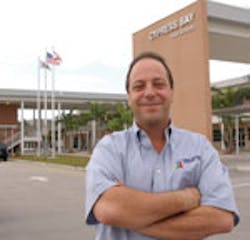
Barry Frankel has never accepted the status quo. He has always been a visionary, and a stubborn one at that. He has always been serious about changing things for the better.
This is why Frankel, owner of Family Vending Co., Sunrise, Fla., is suceessfully overcoming some of the challenges vending operators currently face: rising regulation, the need to use new technology, pressures on profits, and the need to develop new growth areas.
As the owner of one of the fastest growing vending companies in south Florida, he has pioneered vending in public schools at a time when school officials are scrutinizing the role vending plays in contributing to child obesity. Where most of Frankel's colleagues shun the school market, schools represent 40 percent of his sales.
He also played a key role in bringing milk vending to south Florida, and has offered several products not currently available through traditional vend product distributors.
An unwillingness to accept things as they are is one cornerstone of Frankel's character. Another is his excellent interpersonal communication skill, which he honed in his youth as a high school actor. These skills have not only helped his salesmanship; they have enabled him to assemble a top team of committed vending professionals.
Frankel is the president of the Automatic Merchandising Association of Florida, and his company is expanding at a rate of 15 percent per year.
Beginning at age 14
Frankel, 49, has spent his entire working life preparing himself for his role as a vending industry leader, even if it wasn't by design.
He can trace his vending roots to junior high school, when he went to work at 14 as a driver's helper for a Coca Cola bottler in Brooklyn, N.Y. He worked there during his vacations through high school.
After high school, he moved to south Florida and applied for a driver's position with a local Coke bottler. From there, he moved into sales. He learned the importance of making point-of-purchase displays colorful, and of keeping the retail shelves clean at all times. "That's where I learned the competitiveness of the beverage business," he said. "Every step was a learning experience that I use in some way today."
Frankel excelled in sales. His creativity in developing retail displays helped earn him the Fort Lauderdale Coca-Cola Excellence Award in 1976. "I switched Miami Beach from Pepsi to Coke," he recalled. "I worked 16-hour days."
Some of his early experiences were amusing. One motel manager said he would consider switching from Pepsi to Coke, but didn't know what to do with his existing inventory. Frankel told him he'd take care of it, not realizing he'd have 300 cases of product to unload. He ended up selling his competitors' inventory to a local discount house.
By the time he was 21, Frankel was named special events manager, putting
him in charge of full-
service vending. He quickly became frustrated having to deal with a corporate
hierarchy. He particularly took issue with management's policy of providing
machines to accounts, but not to third-party vending operators. He saw this
as highly inefficient; the company was spending a lot of time and energy answering
service calls.
"They loaned machines out like lollipops (to locations)," Frankel
recalled.
"I disagreed with that policy. Why not give the machines to the professionals?
Why would you give a machine to a guy who doesn't know anything about vending?"
As he took on more responsibility, Frankel's frustration grew. Shortly after he was promoted to cold drink manager of the company's West Palm Beach office, management cut three of his service people. He soon left the company.
"I knew I had to go into business for myself," he said.
Going it alone, starting in OCS
The only problem was start-up capital; he had none. He owned a three-bedroom home in suburban Sunrise (near Ft. Lauderdale), was married with a child on the way, and had no funds to put himself in business.
He saw coffee service as a business with low start-up costs, so he borrowed $500 and bought a used delivery vehicle from Coca-Cola and painted it brown. In 1982, he went knocking on doors selling coffee kits to offices that already had their own brewers.
An opportunity soon presented itself right in his own backyard. The city of Sunrise was building a sports park. Frankel, a baseball fan, volunteered to work as a little league umpire. He also asked if he could run the concessions stand. The park manager first said no, but soon changed his mind. He agreed to let Frankel run the concessions stand in exchange for a cut of the sales.
The concessions stand earned Frankel about $20 a night, which supplemented his burgeoning OCS business.
Frankel realized he had a lot to gain having high visibility in the community. He continues to train umpires, and acts as a visiting Santa Claus and Easter Bunny to children. He has won awards for his volunteer work.
Leveraging relationships
Frankel's relationship with the city opened doors for him. The city itself became one of his biggest OCS customers once he was able to buy pourover brewers, on credit.
In the meantime, he was still on good terms with his former employer, the local Coca Cola bottler, and was able to turn this relationship into an OCS account -- one with 25 pourover brewers. "That was a big account," he recalled.
A lucky break puts him in vending
Frankel's entry into the vending business came about almost by accident. One day, he was cleaning the coffee brewer at a Budweiser plant, when the owner of the franchise called him into his office. Budweiser's parent company, Anheuser Busch, had recently formed a snack subsidiary, Eagle Snacks. The owner didn't like the fact that there were no Eagle Snacks products in the company's break room.
He told Frankel he'd sell him Eagle Snacks cheaply if he would place and service a snack machine. Frankel told him he couldn't afford a snack machine, so the owner offered to buy him one. Frankel was in the vending business. "He bought my first snack machine," Frankel recalled.
Having already learned the power of network selling, Frankel promptly approached Budweiser facilities in Hollywood and Miami and told them he was the "Eagle Snacks" vendor. They were more than happy to make him their vending operator. (Anheuser-Busch closed its Eagle Snacks operation in 1996, selling its trademark and brand name to Procter & Gamble Co.)
Network marketing continues
Frankel knew he could jump-start his vending business if the Coke bottler would loan him machines. He reasoned that his relationship with the city would give him some leverage with Coke, which still needed to be sold on loaning machines to third-party vendors.
Having been a Coke insider, Frankel knew the buzzwords Coke management wanted to hear: "City of Sunrise -- 100 percent Coke." Frankel was right; once Coke management heard these words, they agreed to provide him the machines.
Placing soda in the baseball park
Getting the city to let him place soda machines in the baseball park wasn't hard. The park manager knew Frankel's capabilities running the concession stand, and naturally welcomed the opportunity to bring in more revenue with soda machines.
Once Coke loaned him machines for the city park, they began loaning him machines for other locations as well."It was pretty exciting," he recalled.
Working from his garage, Frankel hired several family members in his emerging vending business, hence the name, Family Vending Co. His brother-in-law was his first full-time driver, his sister took over duties at the park concessions stand, and his grandmother-in-law became the controller.
1986: a focus on vending
In 1986, Frankel sold his OCS route to focus on vending. He moved into a mini storage warehouse where he took deliveries from Servitron (which was later acquired by VSA - now Vistar).
It was around this time Frankel expanded into food machines. With more warehouse space available, he attempted to package his own sandwiches on-site. He decided after about a year this was too labor intensive and switched to using all frozen-prepared food.
Frankel differed from many start-up vendors by only purchasing new equipment. He recognized early on that newer machines offered more features and had fewer service problems than used machines. Hence, manufacturer financing programs were crucial to his early growth.
Vending management software also played an important role. Frankel learned about software programs at vending trade shows, and purchased his first management software shortly after bringing on his second full-time driver in 1989. The software kept track of sales and meter readings, and generated route slips.
Computerized accountability becomes critical once a company grows beyond a few routes, Frankel said. The profit margins are too thin to allow any cash drain.
To make sure drivers did a thorough job, Frankel opted to pay drivers a straight salary instead of commission. He believes paying on commission encourages them to focus on the larger accounts at the expense of the smaller ones.
Paying drivers a salary also proved beneficial when the company eventually expanded into the school market, which is seasonal. The company's revenues fall off during vacation time.
An early DEX convert
By the time he reached five routes, Frankel invested in DEX handhelds from Rutherford & Associates (acquired in 1999 by MEI). This was a huge investment for a company this size, but Frankel believed the payoff would be worth it. In retrospect, he thinks he was correct. The DEX handhelds provided excellent accountability, even though the learning curve was long.
"It was a struggle," he recalled. In the early days with the system, many of the machines did not report DEX data in uniform data streams.
"But it was the greatest thing I ever did," he pointed out. "I'm way ahead of everybody." The DEX-based sales reports also make excellent selling tools.
Drivers place their handhelds in the handsets when they return to the warehouse. The handhelds automatically generate orders for the next day's deliveries, and the drivers load their trucks -- 16-foot Isuzus -- for the next day.
Service manager knew handhelds
Frankel found it helpful to hire a service manager with experience with handheld computers, Mark Maloney. Maloney was able to train the drivers on the DEX handhelds, and he also oversaw integrating the currency sorter with the main computer system, enabling him to oversee coin and bill counting in real time.
It was also about this time that Frankel hired his first full-time salesperson, John Brewster. Brewster was a district manager for Sodexho Services Inc. who had relocated to south Florida from Trumble, Conn. Frankel was in no position financially to hire a salesperson when Brewster called him out of the blue, but as with DEX handhelds, he realized that the long-term payoff would be there. He was proven correct.
Brewster brought a lot of experience in preparing professional sales materials, and in developing healthy eating initiatives. The latter would prove useful to Frankel in his efforts to crack the public school market.
A turning point came in 1998. Family Vending Co. moved into a larger facility in an industrial park. It was at about this time Frankel realized that most secondary schools had soda vending but no snack machines. He decided there was a big opportunity in school snack vending. And the fact that other vendors in the area were ignoring it was not a good reason for him to do the same.
The school market beckons
Frankel first targeted one specific high school. He put together a proposal in powerpoint, incorporating the school's sports logo and audio simulated cheering.
He included images of product brands, noted the capabilities of his handheld computers, pointed out the improved reliability of the newer model vending machines, and offered a commission.
The principal bought the proposal.
Once one high school bought the program, others followed. "It was a little
niche that I found," Frankel said.
But that was just the beginning.
After placing his first high school snack machine, Frankel noticed there were no snack machines in the cafeteria. He also noticed that the cafeteria lines were long, and many students weren't getting enough time to eat in the 35 minutes allotted. "Vending would help relieve some of the pressure," he reasoned.
Approaching schools
But getting into school cafeterias wasn't as easy as placing machines in other parts of the building. Food and nutrition departments oversee what goes on in cafeterias, and in some cases, school boards need to approve any changes.
Frankel approached one school board with a proposal to place juice and snack machines in the cafeteria. In keeping with state law, he proposed machines carrying no carbonated beverages and no candy or snacks with minimum nutritional value. He offered to pay a fair commission based on sales volume.
The school board allowed him to do a one-and-a-half-year test in six high school cafeterias.
At the end of the test period, the school board was so pleased with the results that they decided they wanted to have vending machines in all 28 high school cafeterias. But instead of hiring Frankel, the school board put the contract up for bid.
They ended up awarding the contract to the vendor offering the highest commission, which wasn't Frankel.
When this vendor withdrew from the contract, the school board again put it out for bid, and again awarded it to the vendor offering the highest commission, which again was not Frankel. This vendor got into trouble with the school board for not paying commissions and also eventually withdrew from the contract.
Educating the customer
When the board finally allowed Frankel to do a pilot test in one cafeteria, he was able to prove that higher commission didn't necessarily generate the most revenue. Frankel had argued that product selection, name brand products, and more attentive service would bring higher sales, even at a lower commission. His results proved him right. The cafeteria took in twice the revenue they had earned at a higher commission.
The machines in the cafeteria are on during cafeteria hours, and the proceeds benefit the cafeteria program. "You can have machines in the cafeteria as long as the money is going to the cafeteria," Frankel said. State law prohibits food or snacks to be sold in competition with the cafeterias.
Family Vending Co. did a better job keeping the snack and juice machines clean, filled and working than the bottlers, who serviced the soda machines. Some principals were so impressed that they asked Frankel to take over the soda machines as well, forgoing the upfront payments they had received from the bottlers. These machines were mostly outside the cafeteria, and were subject to different rules.
Machines outside the cafeteria must be off until an hour after the last lunch period. However, state law says that soft drink machines do not have to have timers if they have at least one selection of 100 percent juice. It is up to each county what hours they want the machines to be operable if at least one selection is 100 percent juice.
Frankel reasoned that he could improve sales if the timers were removed, so he proposed placing machines that would include noncarbonated beverages along with soda.
This past year, Frankel successfully lobbied the school board to turn timers off in soft drink machines and let the machines run all day. He met with each of the six school board members individually.
Bottled milk proved helpful in Frankel's efforts to get into schools. In 2000, he persuaded a local dairy to provide him milk. He then convinced a high school principal to let him put glassfront milk machines in the school.
Milk helps open doors
Once one school allowed the milk machines, others followed. He now has about 20 dedicated milk machines in schools, and goes through about 1,000 cases of milk a week. He prices the local dairy's milk at $1.25, and the Hershey and Nesquik milk at $1.50.
While all of Frankel's trucks carry some refrigerated product, the company now operates one dedicated to milk deliveries.
To address school health concerns, Frankel and Brewster came up with a "Healthier Alternatives" program. One snack row consists of baked snacks, while another has granola bars, low-fat products and low-sugar snacks. A decal announcing the program goes across the top of the machine.
Family Vending Co. has since begun offering this program to nonschool accounts as well, and these sales are rising. "A percentage of consumers are looking for healthier snacks," Frankel said.
"I tip my hat to Frito-Lay for coming out with baked products at the same price level," Frankel said.
"We certainly aren't getting any complaints to bring back the fried snacks."
The combined "Healthier Alternatives" snack machine and the nonsoda beverage machine (carrying water, juice, Hawaiian Punch, iced tea, milk and Yoo Hoo) make a very healthy presentation in a high school cafeteria.
Frankel has been an outspoken advocate for reason on the school nutrition front. The daily newspapers have published several of his letters opposing proposals to severely restrict products sold in school vending machines.
"We've done a lot of educating and sitting down with school board officials," Frankel noted.
Florida is one of several states contemplating further nutrition restrictions for school vending machines. The Automatic Merchandising Association of Florida, of which Frankel is currently president, has met with state legislators to discuss nutrition restrictions. "It's settled down quite a bit," he said.
Frankel also developed an after-school vending program for elementary schools. Elementary schools oversee 200 to 300 kids a day for up to four hours after school. Frankel provides them glassfront machines that offer milk, juice, and several products not available through vend product distributors: Capri-Sun, Kool Aid Jammers pouches, Minute Maid juice pouches, Hawaiian Punch juice pouches and Yoo Hoo pouches. Frankel buys these products at Wal-Mart.
"It opened up a whole new arena," he said.
While he's clearly made a lot of progress on the school front, Frankel still doesn't view schools as an easy business. They have costly insurance requirements, and they are seasonal accounts. He explains to the principals that he must charge 75 cents for regular size chips to cover his costs.
Vandalism is also a concern with schools. Frankel has retrofitted his glassfront machines with a bulletproof glass frame that has the keypad and coin chute sections cut out. The front doors are secured with a hasp, so they cannot be cut or pried off. Most outdoor machines are bolted to concrete walls.
Frankel has found it worthwhile to stay on top of technological developments. He attends every national and Spring NAMA convention, and every Atlantic Coast Expo in Myrtle Beach, S.C.
He welcomes the improvements that MEI has made to its Easitrax software. He looks forward to eventually using the system's curbside polling capabilities. This will bring significant efficiencies to his school accounts, as well as high rise buildings and facilities with increased security.
"I like the technology that's developing," he said. "Machines will eventually report directly to your office."
Software improves route accountability
The biggest benefit of the Easitrax system is far and away route accountability, according to Frankel. "We are using line item tracking, just not monitoring it as well as I would like," he said.
As the company grows, Frankel realizes that line-item tracking will improve sales and at the same time allow him to purchase fewer stock keeping units.
His desire to track line-item sales is one reason he plans to switch from carousel style food machines to glassfront machines. He thinks it is difficult to track line-item sales in carousel style food machines. In the not-too-distant future, he expects that he will bring on someone dedicated to data management.
Another benefit that the Easitrax system brings is being able to provide customers with detailed sales reports. In the near future, Frankel plans to offer customers the ability to review machine activity in real time over the Internet.
The Easitrax route accounting also allows Frankel to review how long the driver spends at each location. Because of this, he sees no need for the satellite vehicle monitoring systems that some vendors are using to monitor their vehicles.
Technology is evolving on the equipment front as well.
Frankel welcomes the Triton bill validator from JCM American Corp. that recycles bills. "I think it's going to really increase sales," he said. He has converted most of his validators to accept up to $20 bills and pay out dollar coins.
He also anxiously awaits the new, first-in, first-out glassfront beverage machine from Vendo Co. "It's got every problem thought out," he noted. Glassfront machines allow him to meet the demand for more beverages.
The management team evolves
Frankel recently hired a general manager, local industry veteran Steve Thornburg,
who has relieved Frankel from much of the day-to-day management to focus
more on customer relations. Thornburg is currently focusing on two areas:
overseeing the recruiting of new employees and streamlining inventory.
"We bring in good people first and then make them high-quality drivers," Thornburg
said. He reviews motor vehicle reports, criminal records,
and asks for references. A good driver needs to be personable, physically
fit, and capable of multitasking,
Thornburg noted.
Thornburg is less clear about making changes in managing product categories. The concept of category management makes sense for a company with 17 routes, and with Easitrax software in place, the company has the tools to do it. Category management is a data-based approach to product selection that simplifies decisions at the route level and places more responsibility in management's hands.
Machine menuing presents a challenge
Thornburg has conflicting ideas about machine menus, also known as planograms. "Purchasing has become a very important part of vending, and it didn't used to be," he noted. At the same time, "if you planogram, you're limiting your selection to your customers. You need to address different customer segments."
Thornburg said the strength of the management team is that everyone can focus on what they do best.
Frankel is proud of the fact that the company turns down as much business as it takes on. "I reward John (Brewster) just as much for turning down business as taking business," he said. "I love to hear, 'I decided that wasn't good for us.' If your sales manager says it's not for us, there's a guy who's really looking out for your money. In this business, you've got to be careful. Your profit is razor thin."
Good service drives expansion
Frankel is also proud of the fact that the company's first geographic expansion -- to Atlanta, Ga. -- came at the request of an existing customer. One of his oldest and largest customers recently expanded to Atlanta and wanted Family Vending Co. to service its new locations.
To establish an operation in Atlanta, Frankel purchased an existing, two-route operation there, Diamond Vending Inc. He relocated one of his veteran employees, William Lewis, to manage the Atlanta business.
One issue that Frankel has to address is what to do about the Atlanta operation's OCS business. Frankel sold his own OCS business in 1986 to focus on vending. And while some of his employees would like to bring OCS back, Frankel sees both businesses becoming increasingly specialized.
The company does offer catering on a limited basis, and Frankel continues to run the local baseball park concession stand. He also provides hot dog carts for one of his large retail customers in the afternoons, but offers this only as a special service.
Maintaining a public profile
Frankel manages all of the city of Sunrise's concessions for special events, such as the Fourth of July festivities. Having a high profile in the community has enhanced his company's exposure to potential customers.
The future, however, will be on vending and not concessions or catering, as vending continues to become more specialized.
Frankel believes his team is now stronger than ever. The addition of Steve Thornburg in the last year as general manager has rounded out his management group. As owner, he has learned the importance of delegating responsibility one step at a time.
"Each step of growth is very difficult," Frankel noted. Bringing on a general manager was as big a step as hiring his first driver.
Operation Profile
- Name: Family Vending Co.
- Headquarters: Location Sunrise, Fla.
- Founded: 1986
- Owner: Barry Frankel
- Number of Employees: 20
- Number of routes: 17
- Branch operation: Atlanta, Ga.
- Annual sales: More than $5 million