Ragans Merge OCS and Office Products
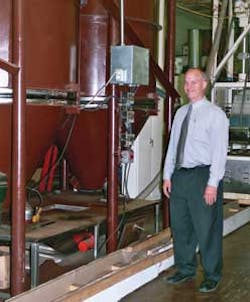
Joe Ragan's Family Of Companies, based in Springfield, Va., has proven not only that the one-stop-shop concept combining OCS and office supplies can work, but that it offers one of the best models for today's highly-specialized, high-investment OCS business. The one-stop-shop model remains rare in today's OCS industry, but there are a handful of successful exceptions.
The company offers office supplies, OCS, bottled water, business furniture, printing services and packaging services, and is enjoying double-digit growth annually.
Overall, office products and OCS remain separate industries, and most observers believe this will not change due to the different requirements involved in the respective businesses. Office product companies that attempt to expand into OCS face difficulty with the service requirements. Some OCS operators who attempt to add office products face issues with inventory management.
Joe Ragan's Family Of Companies is unusual in that it has mastered both disciplines.
Joe Ragan is a first-generation OCS operator who was fortunate in that his son, Dan, joined him at a time before the office products industry consolidated and opportunity still existed for people willing to learn the business. Dan, now president, spearheaded the expansion into office products, which accounts for 40 percent of company sales.
Being able to combine office products with OCS has created a large customer base which has allowed the company to introduce new and better products as they emerge. Today, single-cup coffee is the fasted growing segment of the multifaceted company.
Humble beginnings
Joe Ragan went into business for himself in 1966 in the one refreshment service that he does not currently provide, ironically: vending. After working for several years for Marriott's hotel restaurant division and ARA's education division, he decided to devote himself full-time to a beverage and snack vending route he had launched as a sideline.
In the late 1960s, OCS was emerging as a new service, and young Joe Ragan saw the potential. He hired his first full-time employee to focus strictly on OCS. "That part of the business grew much faster than vending, and it didn't require as much money," he recalled. The vending mainly served as a support service to OCS and was eventually divested.
In 1971, Joe Ragan was among the founding members of the National Coffee Service Association (NCSA). He was among the cadre of operators who realized that sharing information on products and business practices would result in faster growth.
The first major challenge was the coffee freeze in Brazil that nearly doubled green coffee prices in the 1970s. To preserve margins, many OCS operators sought lower pack weights, which eventually resulted in a lower quality product.
The Brazil coffee freeze creates a challenge
Ragan remembers this as one of the most challenging periods in the OCS industry's history. Competitors in the D.C. area were selling 1-ounce packs. Ragan claims he was among a handful of operators that didn't succumb to this pressure to "commoditize" OCS, even though it was difficult.
The cost crunch of the 1970s did have one saving grace, in retrospect. It taught OCS operators the importance of doing taste tests with customers, Joe Ragan noted. He claims he was able to save accounts by demonstrating the superior taste of a heavier pack weight.
The company moved to its current facility in 1981, taking the first of several suites in the business condominium complex. The nation was in a recession at the time, but OCS was still a fairly young industry and established operators were able to grow.
Ragan did not roast his own coffee, which was a disadvantage against operators who did. To compete, he sought out other product lines, and in 1985 he decided to add office products.
The office products business was not dominated by the big retail chains as it is today, so opportunity existed. But it wasn't easy; office products dealers were pressuring their wholesalers to limit dealerships. Ragan went to an office product trade show and found a wholesaler who was willing to take him on if he agreed to buy $10,000 worth of product.
Expansion into office products
Ragan viewed office products not only as a way to create a point of difference in the local OCS market, but also as a way to compete against office product companies that were expanding into OCS.
Fortunately for Ragan, his son, Dan, was then in his early 20s and looking to make his mark in the business. Once the company secured a distribution agreement with an office products wholesaler, the younger Ragan began visiting existing customers and asking for their office products business.
Dan Ragan learned the office product catalog and oversaw the expansion into this business. He said several key OCS customers were helpful in teaching him how to service their needs in this area.
Adding office products to OCS deliveries was not difficult. A bigger challenge was in educating OCS salespeople about office products, which include thousands of stock keeping units (SKUs).
The expansion into office products proved strategically important. By offering more services, the company became more appreciated by customers. The company was also able to minimize the impact of price increases, due to the leverage the expanded product line offered. If coffee prices increased, the company could offer to keep coffee prices stable in exchange for a larger order of office products.
The company did not offer the most competitive office product prices, Joe Ragan said, but the OCS gave them an advantage against larger office products firms. The Ragans decided to continue to focus on OCS, where they could distinguish themselves on the basis of service.
The average monthly office product bill is around $400. This puts the company in the second-tier office products market. The largest office product suppliers target accounts with $2,000 in monthly orders, he noted.
Cornerstone: customer service department
The Ragans developed a customer service department for both OCS and office products order fulfillment. They implemented a software system that integrated orders with delivery schedules. This order and delivery system remains the basis of the company's operations.
Customer service reps call customers for orders, take the orders, then provide completed order forms to the warehouse. The packers in the warehouse then load the trucks for the next day's deliveries. Delivery tickets are simultaneously printed for the drivers.
Because the size of the orders vary daily, the company uses a variety of different size delivery vehicles, from vans to tractor trailers, 45 in total.
The company recently introduced a new mapping software system that will automate its daily deliveries. The orders will automatically create delivery tickets along with delivery itineraries.
To date, the Ragans only warehouse about 5 percent of the 25,000 office product SKUs they sell, which account for 65 percent of products ordered. All of the office products are routed to the product wholesaler, which ships directly to the warehouse. Margins are naturally higher on the products they warehouse themselves.
As the company added more products, more of the customer service function moved from the driver to the customer service department. Drivers stopped cleaning equipment on-site. However, customers can request to have dirty airpots and glass bowls exchanged for clean equipment.
For many years, vending continued as an adjunct for accounts that requested it. While vending grew less important in terms of dollar volume, the company's technical vending capabilities proved important as OCS began to adopt some vending technology in the early 1990s.
The Single-cup challenge emerges
The nation's economy was in recession in the early 1990s, and the OCS industry faced some unique challenges of its own. Specialty coffee stores were expanding, creating a new competitor to OCS.
Filterfresh, a dedicated single-cup provider, was also expanding, creating both a new challenge and an opportunity. Filterfresh introduced the single-serve concept to the U.S., which allowed offices to have coffee house quality coffee. In the metropolitan Northeast, Filterfresh grabbed many of the largest OCS accounts.
The Ragans were among the OCS operators anxious to find a system that would allow them to compete against Filterfresh. They examined all of the single-cup units introduced in the early 1990s, and decided that the Café System 7 from Crane was the best option. The single-cup unit required a higher upfront investment and more technical support than traditional OCS brewers. Thanks to their vending division, the Ragans had the capability to service these units.
The Ragans immediately recognized single-cup's potential. While the unit required a longer payback period than traditional OCS brewers, it offered more product options, a higher per-serving price, and it drove consumption. The company's sales force marketed the systems to accounts with 50 or more people. In some cases, a rental fee was charged. The units generated an average $400 per month, which was more than double a traditional OCS account.
The company ultimately placed 450 Crane System 7s. This is not to say the expansion was without challenges. As with all new systems, the company had to get used to manufacturer revisions in the first few years.
Single-cup has been the single most significant development for OCS, according to Joe Ragan. "Customers are really excited about a single-cup solution," he said. "You've got the double whammy of a more expensive 'cup,' and they (the consumers) are consuming more of it."
Starbucks changes the field
Like many of his colleagues, Joe Ragan is also grateful to Starbucks for educating consumers about better quality coffee. "Starbucks just verified what we had been doing all those years," he said, recollecting his efforts in the late 1970s to encourage customers to buy heavier pack weights.
To hear Ragan praise Starbucks, one might think he was among the exclusive Starbucks OCS distributors in the early 1990s. But that privilege went to a competitor. Ragan instead used Meridien, a coffee roasted by Starbucks, that was available at a local club warehouse. The company provided it to customers in plastic dispensers that served 2-ounce doses.
Portion packs systems were the next development in single-cup. In 1999, the Ragans were named the exclusive Keurig distributor for their market for a limited time. Keurig provided an even more user friendly single-cup system that was less expensive than the bulk hopper systems. The company did a promotional mailing the first year, along with extensive work by the sales reps, and placed 150 Keurigs.
Keurig proves resilient
When the economy went south after 9/11, the Ragans expected a barrage of Keurig cancellations. Surprisingly, this did not occur. "I was kind of shocked that we didn't get a bunch back," Joe Ragan said. Once customers experienced the benefit of having coffee house quality in the office, they didn't want to lose it.
The company gained another competitive advantage in 2001 when it had the chance to purchase roasting equipment. They moved a convection roaster to a neighboring suite in their business condominium complex. They are now able to provide coffee to customers within two weeks of being roasted, which has proven to be a major competitive advantage. The roaster also enables them to offer customized case counts.
The company added its own water bottling machine in an adjacent suite. The machine disinfects the 5-gallon bottles and utilizes a reverse osmosis process to purify the water.
The newest OCS innovation is the manual pod brewer, and few operators have been as aggressive on this front as the Ragans.
Joe and Dan Ragan have paid careful attention to the development of these systems that can brew portion packs of coffee but are not tied to a proprietary coffee. Several manual pod brewers have been introduced in recent years that are less expensive than the older portion control, brew-by-pack systems and have the added advantage of using pods produced by different roasters.
New frontier: manual pod brewers
The Ragans have opted to carry the Caféjo pod brewer from Aquabrew. The Caféjo is not the least expensive pod system available, but it offers an automatic pod eject feature, and reportedly produces an excellent tasting product.
The Ragans have found the Caféjo a good complement to the Keurig. "We're not trying to undermine Keurig. We think Keurig is a great product," Joe Ragan said.
The sales force is excited by the dual offering of Keurig and Caféjo. "They (the salespeople) are leading with single-cup because they know that's the market," Joe Ragan said.
Accounts are offered Keurig, Cafejo, Crane Café System 7 and Newco airpot brewers, the latter of which come in different sizes (17, 23 and 26 inches). In addition, some accounts still request glass pots.
Many accounts opt for a single-cup offering along with a water-soluble dispenser for flavored drinks such as French vanilla and hot chocolate.
The Caféjo brewer can accommodate pods from many roasters, but the Ragans have opted to use Caféjo's own pods. A key reason is that Aquabrew allows operators to acquire free brewers based on the amount of pods they purchase.
When pod brewers expand in the coming years, the Ragans believe that roasters will eventually offer more price competitive pods, making the pod brewers even more cost-effective.
The Ragans have already placed about 700 pod brewers, and they continue to add more Keurigs as well.
As a rule of thumb, the Ragans look to get a payback on a brewer in 14 months. Targeting accounts with a minimum of 20 people, they have not had any problem meeting this target with any of the countertop brewers they carry.
Single-cup is the company's main growth opportunity, Joe Ragan said, but the fractional packs continue to increase as well, thanks to the popularity of specialty coffee. The company continues to sell more and more Starbucks and Godiva fractional packs. As a result, national brand coffee is making a comeback against private label.
Key function: sales training
The development of the sales force has been key to the company's success. Unlike other OCS operations, the Ragans' sales reps are trained first as order takers. This is necessary, due to the need to learn the thousands of office product SKUs. The company has 12 full-time salespeople.
The customer service reps start out taking orders over the phone under the direction of a CSR manager for two months. Those interested in moving into sales work with a veteran salesperson for a while before being sent out on their own. Salespeople are paid 100 percent on commission.
Marketing materials are also an important part of the business. The company sends its customers a 1,400-page catalog from each of its two main office supply wholesalers every year. The cost to the operator for these catalogs is based on the prior year's sales.
Each catalog also includes about 10 pages for Joe Ragan's OCS products which are produced by an advertising agency. The current catalog has the Aquabrew machine as one of the featured products on the cover.
In addition to the catalog, the office supply wholesalers provide 20-page monthly flyers advertising promotional specials, which the Ragans also complement with a few pages on their OCS products.
In 2002, the company launched its website, allowing customers to place orders online. To date, only about 22 percent of the orders are placed online, but the Ragans expect this to grow.
Joe Ragan said he believes the company could utilize the Internet better for marketing. For the time being, they are busy integrating a custom packaging business they acquired less than two years ago.
New addition: custom packaging
The expansion into custom packaging came about by accident. This service has integrated naturally with the other business services the company offers.
The owner of a custom packaging business located near the Ragan facility approached Joe Ragan and told him he wanted to sell him the business. Ragan was doubtful, but the man persisted, pointing out that businesses often need custom packaged crates, bubble-wrap boxes and various other packaging materials. The business consisted of several employees, packaging equipment, a customer base and a warehouse.
The Ragans were eventually persuaded to acquire the company, and they assigned one of their salespeople to learn the new business. They presented the service to their existing customers, and quickly found it a lucrative ancillary business.
Persuading the packaging salespeople to learn office products was a challenge, Joe Ragan noted, but some of them have been retrained.
Diversification has paid off
In retrospect, the Ragans think the decision to diversify into office products and custom packaging has been wise. It has allowed them to maximize their return on their fixed delivery expenses. At the same time, they've gained a lot of clout with their customers as a one-stop-shop provider.
Joe Ragan believes that coffee continues to offer his company the greatest long-term growth potential. Customers today are looking for the best quality products available.
He believes that he will almost double the size of the company in the next five years.
According to Joe Ragan: "You have to be a little more on your toes today than you did 10 years ago."