Digital Media Revolution is Coming
View the Uncut Version of this Article
If there is one thing that has been a constant topic of interest among vending and OCS practitioners it is determining how to successfully enhance the consumer experience. An increased level of interactivity between the consumer and digital media in most retail environments has been shown to effectively increase traffic, sales, revenues, and loyalty.
The recent implementations of video screens and digital signage in a variety of applications have positively impacted customer purchase behavior at the point of sale (POS). As a result of advancement in video distribution and display technologies, digital media has started attracting the attention of self-service providers, including vending and OCS operators.
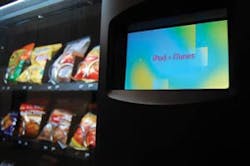
The fact that a video presentation screen can also serve as a touchscreen input device makes applications even more relevant by providing a platform for promotional upselling to an already engaged customer. The real opportunity for vending and OCS channels may lie in the fact that there is potential for merchandising products in the machine as well as sharing in revenues from saleable advertising spots.
The length of time until digital media becomes an integral part of the vending landscape is unknown, but reliable sources claim machine manufacturers have had preliminary conversations with digital network hardware and software suppliers. Perhaps the paid advertising model, implemented so successfully at other retail locations (e.g., post offices, gas stations, and fast food restaurants) may serve as adoption motivators for vending and OCS industry leaders.
VENDING APPLICATIONS FOR DIGITAL MEDIA
A handful of technology companies have developed liquid crystal display (LCD) screens for vending machines and have been testing them in cooperation with video and touchscreen providers, vending product manufacturers and vending operators. The most extensive testing has been done by AVT (formerly known as Automated Vending Technologies). AVT is both a vending machine operator and manufacturer and has developed its own vending management software and hardware.
In recent years, AVT has successfully placed its machines, equipped with proprietary hardware and software, at diverse vending locations.
Another leader in the successful placement of digital signage on unattended point of sale equipment is Zoom Systems. For more than three years, Zoom Systems has been refining its business model (ZoomShop) to focus on high-end, branded consumer products like Apple iPods, Sony Access Electronics, Proactiv Solutions, and Rosetta Stone language software. Zoom Systems expects to have 800 automated retail units in place by the end of 2008, half of which will appear as e-Spot machines in Macy’s department stores.
LCD SCREEN CONTENT CONNECTS VIA INTERNETAVT’s glassfront machines feature a 7-inch wide LCD screen, located above the payment keypad, playing pre-recorded, streaming video advertising content. The video screen connects to a PC via the Internet, which allows content to be transferred to the machine remotely. The LCD screen relies on the same PC connection that allows remote access of other machine activities.
During the past year, AVT tested streaming video commercials in 10 of its machines in cooperation with select vending product suppliers. These machines displayed commercials for a variety of products, including Otis Spunkmeyer Inc., Living Essentials Inc. (maker of 5-hour Energy) and Tropicana Products Inc.
Another 10 machines serving similar populations were configured with identical product offerings but without the video screens for comparison purposes. As a side note, the machines involved in the test did not have cashless readers.
The company has reported that the machines featuring the video commercials experienced sales increases of 20 to 30 percent over the machines without the broadcast content. While these tests are only a first step, they demonstrate the potential impact digital media can have on sales of promoted items.
One AVT representative compared the content of the vending video screens to TV infomercials, which have proven to be a successful sales tool. Simply stated, this approach is a powerful form of point of sale advertising.
ZOOMSHOP USES TOUCHSCREEN INTERFACE
ZoomShop machines can be found in retail stores, shopping malls, and airports. Each device relies on a touchscreen interface that enables the consumer to shop for products in the machine in a manner similar to an online search and selection routine.
All transactions require electronic payment which activates a robotic mechanism to retrieve and dispense the purchased product. All machines are remotely monitored and, on average, take up approximately 28 square feet.
In a July 2008 newspaper account, Zoom Systems compared a traditional beverage or snack vending machine, which it pegged with monthly revenues ranging from $330 to $1,000 per square foot, to ZoomShop units that generate $3,000 to $10,000 per square foot per month. Additionally, the firm claimed that at least one of its highly successful locations collected revenues of nearly $40,000 per square foot per month.
Clients attribute much of the ZoomShop’s success to the digital media at the core of its customer interface. Zoom Systems explains its business approach in two short sentences posted on its Website: “ZoomShops are automated, self-service stores that combine the convenience of online shopping with the immediacy of traditional retail. Powered by easy-to-use touchscreen technology, ZoomShops are part of a state-of-the-art network of automated retail stores that are found in over 650 airports, malls, and retail stores across the U.S and internationally — and growing.” The impressive results Zoom has experienced brings added attention to the potential contributions of digital media to the sphere of automated merchandising.
MORE VENDING VIDEO SCREEN APPLICATIONS EMERGEWhile AVT and Zoom Systems have been pioneers in placing video screens on vending machines, other companies have followed close behind.
Direct marketing company SPIO Media Network, primarily involved with coupon dispensing through adaptive devices that affix to a vending machine, is likely to add video screens as a secondary offering.
Taking a similar approach is Quickstore24, which offers special purchase packages marketed through its built-in, large video screen. By having the video screen also serve as a touchscreen, Quickstore24 eliminates the need for a traditional keypad for data entry.
As mentioned earlier, in addition to promoting machine-based products, digital media also provides a base for displaying paid commercial advertisements. Such advertisements may be contracted through a digital media network. The network may contact product manufacturers, service providers, and news agencies to purchase commercial space on the channel.
These advertisements can provide vending operators with incremental revenues not otherwise obtainable. For the past several years, Solara Technologies has offered a vending machine with a touchscreen point-of-purchase interface along with a multi-language capability.
Additionally, there are several digital screen suppliers that claim their products can be retrofitted to work in a vending machine, which boasts much potential for industry-wide implementation.
One recent vending application that incorporates a vending machine and a Web interface is offered by Vendweb.com. The Nutri-Vend 1000 machine dispenses powder-based nutraceutical drink mixes (e.g., protein, weight loss, low-carbohydrate meal replacement, high carbohydrate, meal replacement, recovery or energy supplements) in the form of a chilled beverage.
The machine delivers the mixed cold beverage to the consumer in approximately 30 seconds. While this type of internal mechanism may not be unique, what is unusual is that the product is marketed as having a Web-based touchscreen kiosk interface. The kiosk enables consumers to obtain more information about nutraceutical beverages as well as to make a delayed purchase by configuring it to accept an order via the Internet, with next day delivery.
In addition to the kiosk providing important product information, it also is designed to generate external advertising revenue (up to 20 advertisers with 6-second clips), thereby rendering it an electronic advertising vehicle and a vending machine. For those consumers interested in purchasing products for remote delivery, the kiosk provides a base for access to a secure Website for order processing.
Interactive displays enable an operator to attract a larger target audience to a vending machine, provide more information that is pertinent to the customer, and track how the information is used. Interactivity is considered the best way to prove the effectiveness of a digital signage system.
An additional advantage of digital media is its potential for revenue generation through the sale of advertising space within the playlist. Niche marketing can provide an opportunity for non-machine based product revenues as a result of payments made on a per-performance broadcast.
While vending operators may elect to control their own media content, there are network providers offering broadcast and production services that enable the sale of presentation time to off-premises product promotions or external business entities.
Advertising sales may represent a significant number of incremental dollars to a vending operator’s bottom line profitability and may be gotten despite the fact the operator played no role in soliciting or attracting the advertising.
To gauge the long-term implication of digital media for vending, the experiences of three related service industries (the postal service, fast food restaurants, and gas stations) are instructive.
THE POSTAL SERVICE TESTS DIGITAL SIGNAGEThe U.S. Postal Service (USPS) has tested and deployed a digital communication network. USPS, considered an early adopter of digital signage, began testing the impact of digital versus static menu boards in post office lobbies nearly a decade ago.
In 2004, USPS introduced its Post Office Channel (a combination promotional channel and employee communications network). The USPS-TV network has benefited greatly from advancements in digital media technology, including content delivery methods and declining costs of production. The objective of the Post Office Channel is to improve the customer experience at more than 32,000 retail locations.
The Post Office Channel features product and service messages to educate and inform retail customers. For example, one message compares the product features of overnight express mail and 2-to-3-day priority mail. Another compares delivery confirmation to signature confirmation and indicates which form to use depending on which service the customer desires.
A second opportunity is to redirect customers and actually change customer behavior. Part of the long-standing tradition of how customers behave in a retail space is that many are focused on getting served as quickly as possible.
Suppose there are several customers in the general service line when all they need are stamps.
Digital signage can be used to help change customer behavior by redirecting stamp seekers to the Automated Postal Center (APC), an automated, unattended machine that sells stamps and allows customers to mail packages.
It is important to note that the digital content used to direct customers to the APC is very short (three to five seconds) and consists of brightly colored messages like “Jump the line. Ship packages at the APC.” Or, “Get out of line. Buy stamps at vending.”
As a side note, the postal service offers 70,000 off-site access self-service locations where customers can buy stamps or mail packages without assistance, including supermarkets, drug stores, convenience stores, ATMs, and online. The messages broadcast over USPS-TV in post office lobbies also contribute to customer awareness and confidence in these convenient alternative options.
FAST FOOD RESTAURANT MENU BOARDSClosely akin to the promotional and operational functionality of the vending and OCS industry are fast food restaurants. While menu boards continue to be a focal point in most of these establishments, dynamic digital signage can be a complementary medium for in-store promotion and interactivity.
Audio and video broadcasting is currently receiving much attention in the foodservice industry. For restaurateurs with customers in the lobby, in-store promotion is not aimed at convincing consumers to dine; it’s about influencing what to purchase. Effective in-store content has been shown to impact consumers to purchase at a higher incremental level in average check.
SIGNAGE ENABLES UPSELLING, BRANDING AND BUNDLINGThe signage effort is focused on upselling, branding, and bundling. Content can include menu item descriptions, preparation instructions, and related informational items as well as new item introduction, add-ons and modifiers, recipes, nutrient content, and in-store discounts and promotions.
Given the time-specific nature of presentation, the results of a digital signage campaign can be easily tracked and measured. Consumers appreciate being entertained and informed, not just marketed to.
Research indicates that since consumers in restaurants are at the point of purchase by choice, they are more prone to influence than customers in other retail settings. Dynamic digital signage can be persuasive as it delivers special promotions, updates menu items and intelligently advertises selections based on time of day.
EFFECTIVE CONTENT ENGAGES THE CONSUMERSimilar to a vending customer, restaurant patrons rely on short and relevant information that can be comprehended quickly. A smart approach is not to plan long broadcast pieces but to break up short promotional materials with non-advertising content, thereby creatively engaging the viewer without overselling. Such an approach has evolved from management recognizing that there was a large amount of in-store commercial real estate that needed to be matched with a powerful networked media.
The conversion from static (photo displays or sequences) to dynamic content (video “signets”) has led to more in-store target marketing.
In many fast food restaurants, the drive-through may be responsible for more than half of its transactions, and the menu board can play a significant role in consumer purchase decisions.
POINT OF SALE MESSAGE IMPACT SALESThe display simply plays a major part in the quickness and convenience of the experience. Despite this apparent need for speed, dynamic digital signage has also been shown to positively impact point of purchase decisions and lead to increases in sales. Just as contactless payment readers are designed to move the customers through the line quicker, so too is digital signage intended to accelerate service but with a higher contribution margin.
Fast food restaurant operators are finding that dynamic digital signage can enhance the customer’s point of sale experience while extending the company’s brand and strengthening customer loyalty. It is likely that vending operators will have a similar experience.
Video clips can be viewed on several devices, including a television screen, PC monitor, cell phone, video iPod, smart billboard, and assorted non-traditional platforms. There are more touchpoints appearing in more places than ever before, and vending operators would be wise to keep track of such developments.
Berry Chill, a yogurt chain based in Chicago, provides customers with a daily menu of chilled yogurt (including regular and rotating flavor choices). Customers are able to customize selected yogurt or choose from a list of signature creations. Berry Chill has installed Scala Infochannel software, a digital network featuring creative content. Unit installation includes four LCD screens at the order counter, two for menu ordering purposes, and two for promotion of Berry Chill’s clothing line, nutritional information, and charitable efforts.
PAY AT PUMP ADVERTISING: A MODEL FOR VENDING?The vending industry may have a preview of coming attractions when it reviews the experience of gas stations and their experiences with digital media. Gas station video screens, which display paid advertisements as well as market products sold on-premises, represent an application somewhat akin to vending.
Pay-at-the-pump technology, introduced in 1987, has been highly successful at moving petroleum, but it has resulted in a significant reduction in-store traffic where higher margin items are sold. Industry experts predict two-thirds of gasoline customers never enter the store.
In an effort to drive foot traffic into the store, units called pump-toppers (static advertisements promoting in-store specials) are being replaced by digital signage networking. By installing digital screens atop the pumps, stations are able to use the screens to display promotions for in-store items, variety entertainment, commercial advertisements, and news content.
Launched in June 2006, Gas Station TV employs 20-inch daylight-viewable monitors that affix to the top of a standard gas pump to deliver news, sports, weather and traffic information to customers filling their gas tanks.
Content is the result of a partnership between ABC National Television Sales and GSTV, which boasts 5,600 screens in its network. While the popularity of advertising at the gas pump has expanded, nearly half of the placed broadcast advertisements are of standard television length.
Akin to adjustments for advertisements designed for different media platforms (e.g., billboard, Website, or radio) advertisers have been reluctant to modify content for the network. In essence, GSTV wants to persuade its advertisers to modify and simplify ads appropriate to its delivery platform (i.e., shorter than 30-second length spots).
A Nielsen study, conducted for GSTV, revealed that advertisement recall for a 15-second spot, and even some 10-second spots, were significantly more effective than the traditional 30-second promotion. For example, a 15-second advertisement for a premium candy bar was 7 percent more effective than a traditional 30-second counterpart and generated 108 percent greater return on investment.
Similarly, a 10-second advertisement for Pop-tarts had 2 percent higher recall and generated 156 percent greater return on investment. GSTV’s approach is to convince advertisers that shorter promotions generate the same or greater effectiveness as longer ads, while produced at a much lower cost.
Since 2006, Gas Station TV (GSTV) has managed and provided a video content network to gas station customers at zero cost. GSTV derives its revenues through the sale of on-screen advertising to a variety of major accounts (e.g., Chevrolet, Progressive Insurance, and Quicken Loans). The stations enjoy incremental sales increases without having to be concerned about external promotional revenue generation.
What do gas station video network providers claim an application will provide to the station owner? Here is the short list:
- A customer loyalty program to drive motorists to the station.
- On-site promotions that create activity and excitement at the site.
- Audio/video commercials to drive customers into the store.
- News, weather and sports from local providers.
- Couponing that adds value to the shopping experience.
- A low energy usage, double-sided 19-inch LCD pumptop device.
As digital media begins to emerge in the vending and OCS channels, the question remains, what next? The next generation of promotional concepts is likely to include aromatherapy (smell), dialogue (sound), and 3-D formatting (sight) to attract consumer attention.
The strength of dynamic digital signage over print media or basic broadcast media may not just be technical; it may also be psychological. Dynamic digital signage (DDS) can influence purchase behavior, deliver product information, entertain, and broadcast emotional messages to enhance the customer experience at the point of purchase.
DDS allows for instant product updating, pricing, item availability, descriptions, discounts, promotions, and the like. Screens can be part of a centralized network for multi-unit operation or separate for independent operations. In addition, a vending company may opt to have variable content controlled over a network featuring paid advertising.
Even the best hardware, software, and netware will fail spectacularly if it relies on weak, boring, or poorly designed content. As dynamic digital signage becomes more popular, the cost of installation and training are expected to continue to decline. DDS can have an unparalleled impact on customer purchase decisions and therefore deserves consideration in vending and OCS operations.
Digital video signage has the ability to reach the right customer, in the right place, at the right moment.
(Editor’s Note: For more on this topic by Dr. Kasavana, go to www.amonline.com/kasavana.)
For more information, contact:
- AVT, 877-424-3663, www.avtinconline.com
- Gas Station TV, 888-581-4788, www.gstv.com
- QuickStore24, 877-893-8903, www.quickstore24.com
- Solara Technologies, 888-227-9505, www.solaratechnologies.com
- SPIO Media Network, 866-604-7746, www.spiomedia.com
- U.S. Postal Service, 800-275-8777, www.usps.com
- Vendweb, 704-435-1466, www.vendweb.com
- Zoom Systems, 415-864-8100, www.zoomsystems.com