Changing broker landscape barely fazes operators
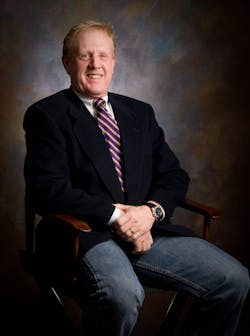
This past year, Jim Evans, who operates a vending/OCS business in Moonachie, N.J., felt he needed a new single-cup system to offer his customers. The single-cup business had been good to him over the years, but Evans felt he needed something new. Fortunately, a broker had just what he needed.
National Coffee Service & Vending Inc. (NCVS), a nationwide product brokerage based in Lake Worth, Fla., introduced Evans to Café Classic and Barnie’s coffee pods for his manual pod brewers. Evans wasn’t aware of these lines, but they proved successful. He’s grateful for his relationship with Brent Toevs, president of (NCVS), a brokerage that has nationwide contracts with several product manufacturers.
“Brent represents quite a few different products,” Evans said. “They have a real unique knowledge of what’s going on out there, not only in my region, but also throughout the country,”
In Pompano Beach, Fla., Scott Guardino, general manager of Paramount Automated Food Systems Inc., had a very different broker experience this winter.
In January, a broker sales team from a company that has expanded its geographic reach called on him a full month after he had finalized his 2011 buying plans. “Why talk about it now? Talk about it in December,” Guardino complained. In years past, the brokers who called on him were “calendar conscious”; they had “pre-planogram meetings” on their calendars. Guardino attributes this to the fact that brokers used to cover smaller territories, so they knew their customers better.
The contrasting experiences of these two operators represent the extremes vending operators have reported in working with product brokers as of late. While operators/broker relations have always varied, many observers agree this past year witnessed more changes in broker assignments than normal. And changes can be difficult for operators accustomed to long-term relationships.
Broker consolidations, manufacturer consolidations and new sales strategies on the part of some manufacturers are among the reasons cited for changing broker assignments.
Broker’s role remains key
Product brokers have always been important resources for vending and OCS operators. They identify products from other classes of trade and persuade manufacturers to adapt them to vending. They introduce operators to new products. They make operators aware of rebates and promotions.
More recently, some brokers have begun providing operators with useful sales data, thanks to evolving data management tools.
But as the industry has matured, consolidation among vending operators and product manufacturers alike has made the vending industry more competitive for brokers. In response, many brokers have expanded their geographic territories.
Those expansions have increased, and at least three brokers now claim national coverage for vend products.
National brokers emerge
The brokerages that have signed national contracts have taken different approaches. All three happen to be based in Florida.
G & J Marketing in Palm Harbor, Fla. and Burdette Beckmann Inc., based on Hollywood, Fla. have expanded their sales team to include offices in all geographic markets.
G & J Marketing has a nucleus of managers that oversee contracted sales people. (See sidebar on page XX.)
National Coffee Service & Vending Inc. (NSC&V) in Lake Worth, Fla. subcontracts other brokers for its national contracts, noted Brent Toevs, who has sales managers in every geographic region.
Most give brokers high marks
An informal, nationwide operator poll revealed that most operators remain satisfied with the level of service they get from their product brokers. Operators agree that brokers continue to play an important role in their need to know about new products and promotions.
Tom Konop, president of The Konop Companies Inc. in Green Bay, Wis., said there are fewer brokers today than there were 10 years ago, but the ones he buys from are more attentive to him. He attributes this to operator consolidation; since there are fewer customers, brokers must work harder to earn and keep their existing business.
However, Konop also noted there is more change in broker assignments than there used to be, a change that he doesn’t like since he prefers long-time business relationships. Konop attributes this change to manufacturers seeking to improve their results.
The recent decision by some product manufacturers to assign their vending business to fewer brokers has not alarmed most operators. Most operators agree that the broker that services their needs properly will retain their business.
In some markets, broker expansions have given operators more sources to choose from. In other markets, consolidation has reduced the number of brokers for operators to work with.
Several operators noted that as brokers have consolidated, they have become responsible for larger portfolios, creating new challenges.
Some operators think brokers need the right number of lines in their portfolio to give the lines proper support. Too few products make it hard for a broker to be worth a lot of the operator’s time. Too many products make it hard for the broker to give the lines proper attention.
This issue is important to operators who have noticed that product manufacturers have cut back on their direct sales forces, giving brokers a larger support role.
“The nice thing about brokers is they know you and what your needs are,” said Emory Linder, president of Sun Dun Office Refreshments in Beltsville, Md., who noted that brokers have been especially helpful telling him about healthy options and “green” products.
Varying views
Geographic expansion in itself does not automatically translate into poorer service, most operators agree. The level of service depends on the broker’s capability and commitment.
Scott Guardino, general manager at Paramount Automated Food Systems in Pompano Beach, Fla. offered one of the more negative reviews of broker performance. The brokers that have expanded have moved the experienced brokers away from the “front lines” in the field and replaced them with less experienced people.
“There’s a dilution of talent; a dilution of attention (on the operator),” Guardino said. “The broker industry right now brings me reduced value.”
Larry Pugh, general manager of Mid-South Food Services in Aberdeen, N.C., said he gets less broker attention than 10 years ago, but the quality he gets is better. He credits G & J Marketing, with its wide geographic perspective, with giving him good insight into the changing market. “It’s a real good source of information about what’s going on in the industry,” said Pugh.
“The ones that I have now certainly are the cream of the crop,” said Becky Palazzola, co-owner of A Matter of Taste in Northridge, Calif. “I don’t feel that any line is slighted. They’re very good at bringing me the new items.”
The case for high volume
Stu Case said strength in numbers as well as the opportunity to be part of an organization that would soon cover all 50 states were his primary considerations when in 2008 he and his partner, Bob Mattias, merged Yorba Linda, Calif.-based Pacific Brokerage with Hollywood, Fla.-based Burdette Beckmann Inc. Case said the declining vending market was also a consideration, but this was secondary. “This is still going to be a viable industry,” Case said.
Case said the consolidation that has occurred among brokers is a natural evolution for an industry that was launched by entrepreneurs and family operations.
“There’s much more you can bring to the table as far as coordinated marketing activities and coordinated strategies,” Case said, citing the benefits of a larger organization. He pointed to a dedicated marketing staff and a statistical group that gathers data from distributors, reporting services, rebate processors and other retail channels to assemble into a variety of beneficial reports for vending operators. “That’s hard to do as a smaller company,” Case said.
Richard Atnip, president of the Atnip Co. Inc. in Fullerton, Calif., agreed. “That broker infrastructure brings a lot of strength to the operator,” he said.
Some manufacturers favor the national broker concept. “It allows us to have fewer regional managers,” said Tony Shroder, president of convenient channels for Advanced Pierre Foods, which named G&J Marketing as its broker for every region except Ohio, Kentucky, Indiana and Michigan, which is covered by Twinsburg, Ohio-based Statewide Brokerage.
Others disagree.
The case against high volume
“I have a tough time staying on top of my own state with three vend sales reps,” said Scott Rorah, president of Michigan Merchandisers Inc. in New Baltimore, Mich. “Every time those guys have done that (expand territories), I’ve seen the coverage go down.”
"If what happens in other channels of trade is any indication, national brokers many times just hit the top 20 percent, not the whole market," said Ken Cain, owner of AVB Sales & Marketing, LLC in Cincinnati, Ohio. "The national coverage isn't usually as deep into the operator base. We (local/regional brokers) hit 100 percent, not just the top 20 percent. The deeper the coverage the better the service to both manufacturers and the industry."
Some manufacturers concur with this view.
“We’ve never even gone with anybody who’s even a regional broker,” said Bill Dennis, national director of sales at Kar’s Nuts. “The local guy tends to know things better.”
“The operator still likes to have a local broker call on them, someone they trust and know,” said Doug Lengyel, western regional sales manager at Promotion In Motion Companies Inc.
While many brokers have expanded their territories and their sales teams, these changes have in some cases made competitors out of former compatriots, which has reduced cooperation that sometimes improved the quality of brokers’ services.
Dave Gellman, president of Norristown, Pa.-based Gellman Associates, recalls when there were two nationwide broker associations. Today, only the National Vend Brokers Association remains, and it is a smaller group.
Andrew Young, president of the Natick, Mass.-based brokerage Harold W. Young Inc., envisions a network of independent brokers working together in the future, providing similar services as a national group. The operator will receive the same care a local broker provides but with the management and marketing support of a national organization.
Other issues seen as more important
For many on both the operator and manufacturer segments, there is no debate; the size of the broker does not determine the quality of the service.
Paresh Patel, owner of Courtesy Vending in Portland, Ore., thinks that brokers and manufacturers alike could be doing a better job giving operators better quality products and information. He said some products that have been introduced have not been packaged right for vending.
As for sales data, he said brokers could be doing a better job providing him with machine-level sales data. “What’s being reported is not actually true (machine level) sales, but (warehouse) purchases,” Patel said.
Patel said there remains a need for more products that meet school nutrition guidelines, and the need for these products is not confined to school accounts.
“We’re comfortable with the value that the broker community provides us,” said Craig Harkins, sales director for vending and foodservice at The Inventure Group, a specialty snack manufacturer.
“It (national coverage) can be effective if the structure is set up properly,” observed Dave Rasmussen, president of Rasmussen & Associates Inc., the Minneapolis, Minn.-based brokerage serving a 5-state region. Rasmussen said a larger area can be serviced efficiently and effectively with the right team in place, but he is quick to point out that “efficient” and “effective” are not synonymous.
“Efficiency and effectiveness are not one in the same,” Rasmussen added. “You’re only going to be as strong as the individuals you have in each given market.”
G & J Marketing evolves into nationwide product broker
G & J Marketing and Sales, founded in Palm Harbor, Fla. in 1984 as a statewide vend and OCS product broker, has developed a nationwide presence. The company has a team of regional managers and administrative support staff overseeing independent sales reps nationwide.
Greg Sidwell, founder, owner and president, believes the company offers product manufacturers an opportunity to gain nationwide sales support to vend product distributors in a cost efficient manner. The company has a total of 40 employees, more than half of which are sales reps.
In 2010, G & J acquired SpecMark Sales and Marketing, which represented several national vend product manufacturers that were exclusively distributed by Vistar Corp.
Later in 2010, G & J hired Daryl Thomas, director of packaged food sales at Pierre Foods Inc. as Central region manager, Marty Mirt, PepsiCo Inc. Frito Lay division’s senior key account manager as North region sales manager, and James Barber, operations manager at Classic Food Service, Durham, N.C. as West region sales manager, all as part of a national organization.
Shortly after, Advanced Pierre Foods Inc. named G & J Marketing as its first national broker.
About the Author

Elliot Maras
Elliot Maras served as the editor of Automatic Merchandiser magazine from 1993 to 2012. To reach the current editor of Automatic Merchandiser and VendingMarketWatch.com, email [email protected].